Stair-Step Cracks in Brick: Causes and What to Do Next
That zigzag crack climbing your brickwork is your foundation talking. What causes stair-step cracks in DC's brick homes, and the steps to take.
Read the guide →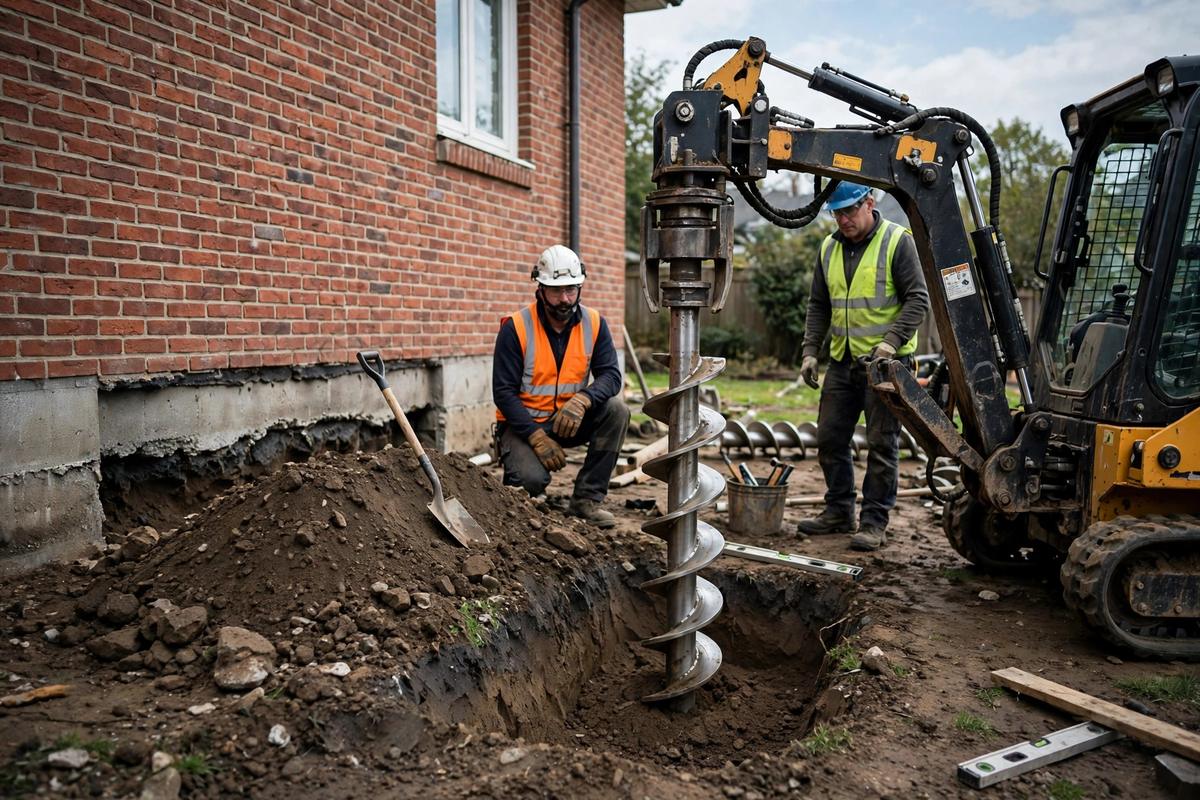
When a foundation settles, the durable fix is to transfer the weight of the house from weak surface soil to deeper, stable soil or bedrock. Pier systems do exactly that — and the two common types, helical piers and push piers, get there by different means. Understanding how each installs, what soils and situations suit it, and how lift is handled will make any stabilization proposal much easier to judge. This guide gives DC homeowners that background before they sign anything.
A helical pier is a steel shaft with helical plates, screwed into the ground by hydraulic equipment — literally a giant screw. As it turns, the plates pull it deeper until torque readings indicate it has reached soil with the required bearing capacity. Because installation is measured by torque, the capacity of each pier is verified as it is installed. Helicals need no curing time and relatively modest excavation, and they work where the structure's weight is not enough to drive a push pier.
Push piers are steel pipe sections driven hydraulically into the earth using the weight of the house itself as resistance. They advance until they reach a load-bearing stratum capable of supporting the structure, verified by the driving pressure. Push piers suit heavier structures and soils where a friction or end-bearing layer sits deep. Because the building provides the reaction force, very light structures may not be candidates — an honest evaluator will tell you which system your house and soil favor.
Piers can be used to stabilize a foundation at its current elevation, stopping further settlement, or to attempt lift — raising the settled section back toward its original position. Lift is not guaranteed: it depends on the structure, how long it has been settled, and what finishes and utilities are attached. Reputable proposals state plainly whether the goal is stabilization, lift, or both, and what cosmetic effects (cracks closing, doors freeing) may or may not follow.
A complete proposal states the number and locations of piers on a diagram, the target depth or capacity criteria, whether lift is attempted, how the work is warranted by the provider, and what landscaping or concrete will be disturbed and restored. Ask who verifies depth and load, and get the plan in writing. Through DC Foundation Pros you can connect with a local provider who installs pier systems and will explain the recommendation for your soil and structure — before you commit.
It is also worth remembering how much Washington housing varies within a few blocks. A single street can hold 1890s brick row houses on stone foundations, 1920s colonials on block, post-war homes on poured concrete and recent construction with modern drainage — each aging differently under the same weather. Clay content in the soil changes across the District as well, which is why two neighbors can have genuinely different foundation experiences. Local providers see that variety every week, and their pattern recognition matters: they know which neighborhoods sit on troublesome soil, which eras of construction used which foundation materials, and which repair methods have proven themselves on each. When you read general national advice about foundations, translate it through that local lens — or better, ask a provider who works in Washington to translate it for your address.
For the services behind this guide, start with our foundation services in Washington, DC overview, compare foundation repair with a professional foundation inspection, or go straight to foundation repair in Washington, DC on the homepage.
Whatever you decide, three habits protect homeowners: get the scope in writing with methods and areas named; clarify what happens if hidden conditions are found once work opens the wall or soil; and keep every document — evaluation, contract, diagrams, warranty papers — in one file for the day you sell or refinance. If you would like the first step handled for you, DC Foundation Pros exists for exactly that: call (202) 449-5049, describe your home and what you have noticed, and we will connect you with an independent local foundation provider. There is no obligation — just a shorter path from worry to a professional, documented opinion.
Calling DC Foundation Pros takes a few minutes. We ask what you have noticed — when it started, whether it is changing, which part of the house is involved — and where in Washington you are. We then match you with an independent local provider whose work fits the problem: repair, waterproofing, stabilization, drainage or evaluation. You speak with the provider directly, schedule the inspection at a time that suits you, and receive their findings and any proposal in writing. The decision to proceed, and every term of the work, is between you and the provider. The referral itself is free, the lines are answered around the clock, and there is no obligation at any point — the service exists to replace a week of searching and callbacks with one conversation.
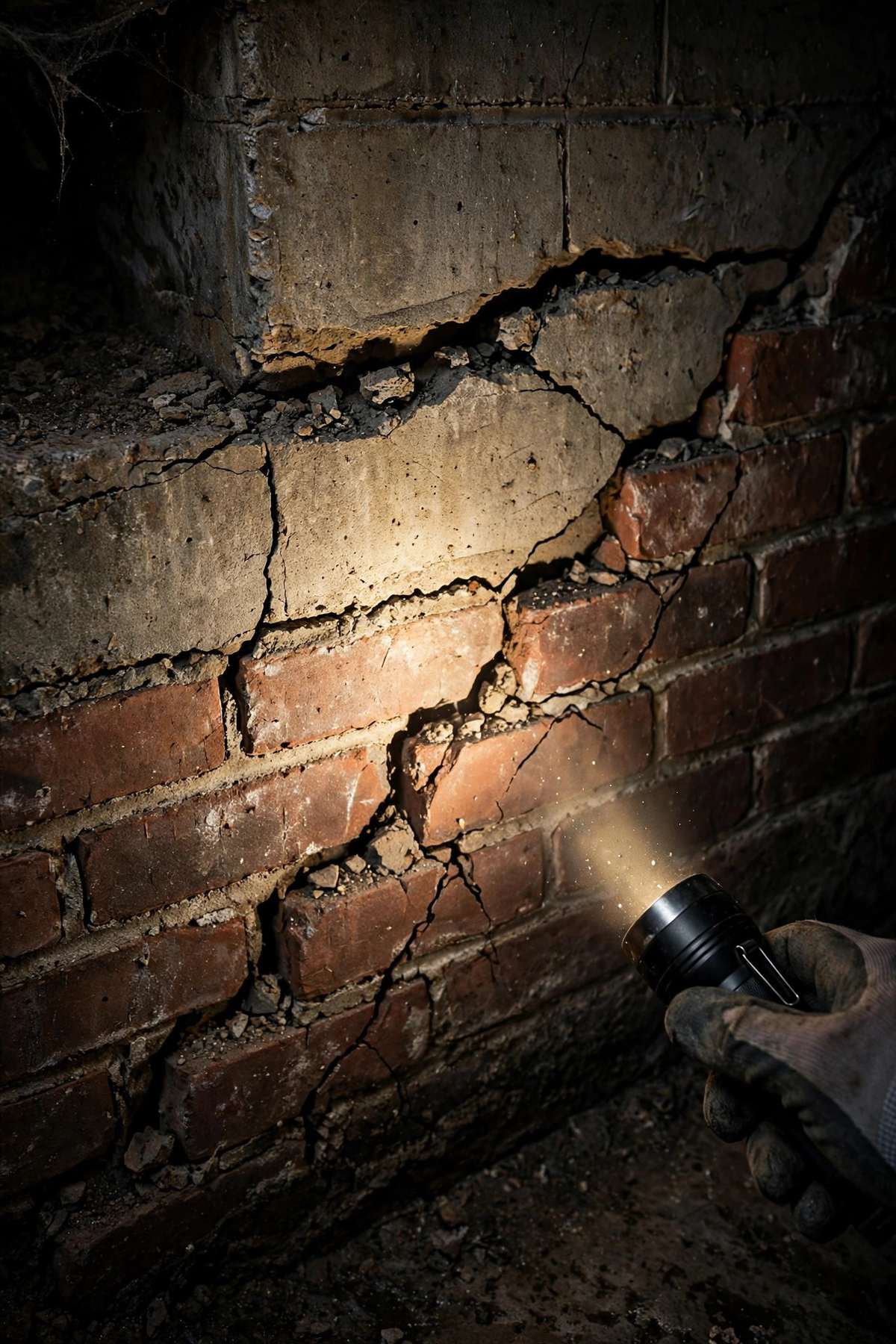
That zigzag crack climbing your brickwork is your foundation talking. What causes stair-step cracks in DC's brick homes, and the steps to take.
Read the guide →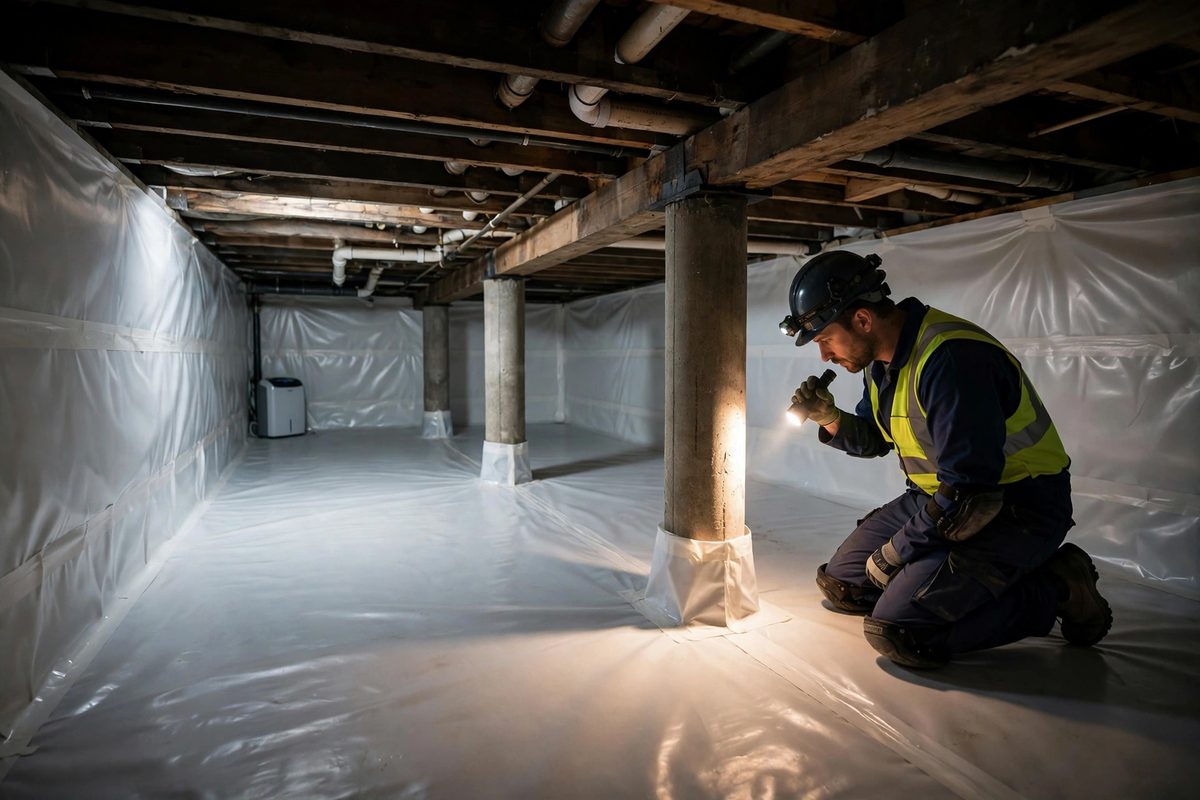
Vapor barriers, sealed vents, drainage and dehumidification — how encapsulation turns a damp crawl space into a clean, dry part of the house.
Read the guide →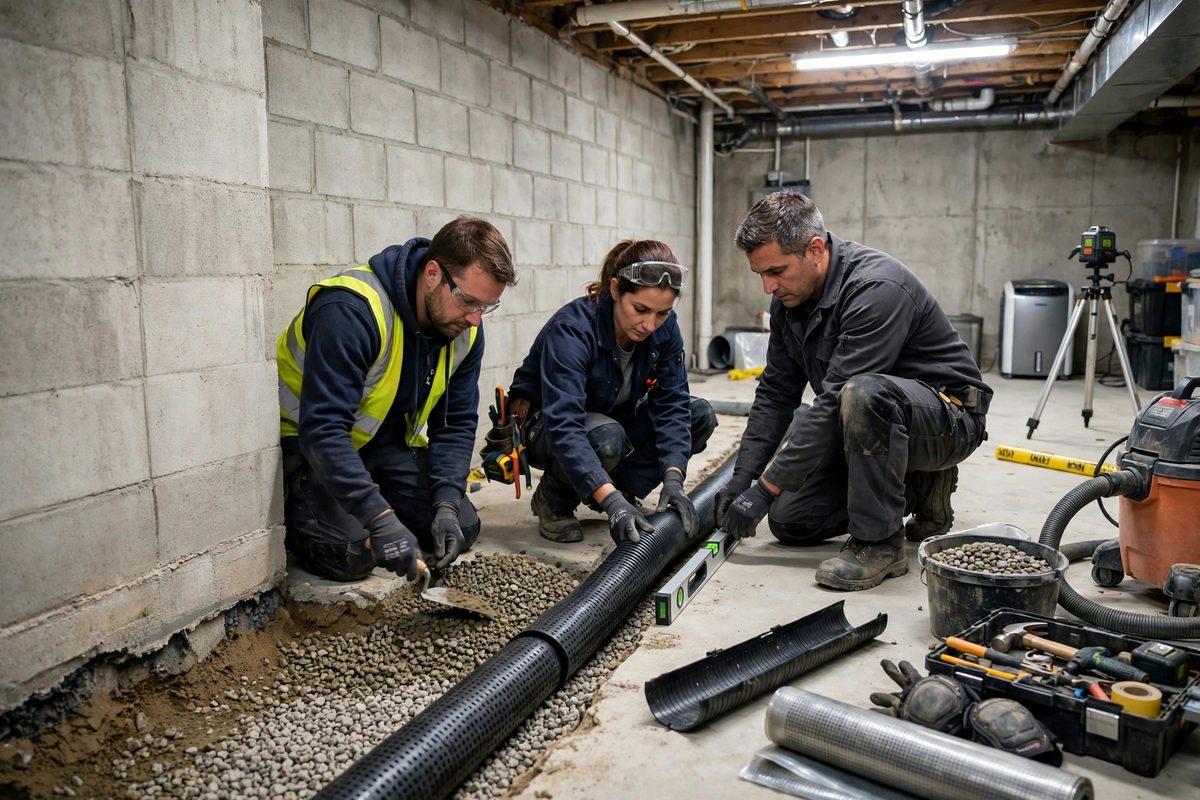
Most wet basements trace to a short list of causes — gutters, grading, groundwater, cracks, plumbing and condensation. How to tell them apart.
Read the guide → DC Foundation Pros
Call DC Foundation Pros now and we will connect you with an independent local foundation provider in Washington, DC — no pressure, no obligation. Lines are open 24/7.