How Long Does Foundation Repair Take? Timelines by Project Type
Crack injection in a day, piers in days, waterproofing in between — realistic timeline ranges and the factors that stretch them.
Read the guide →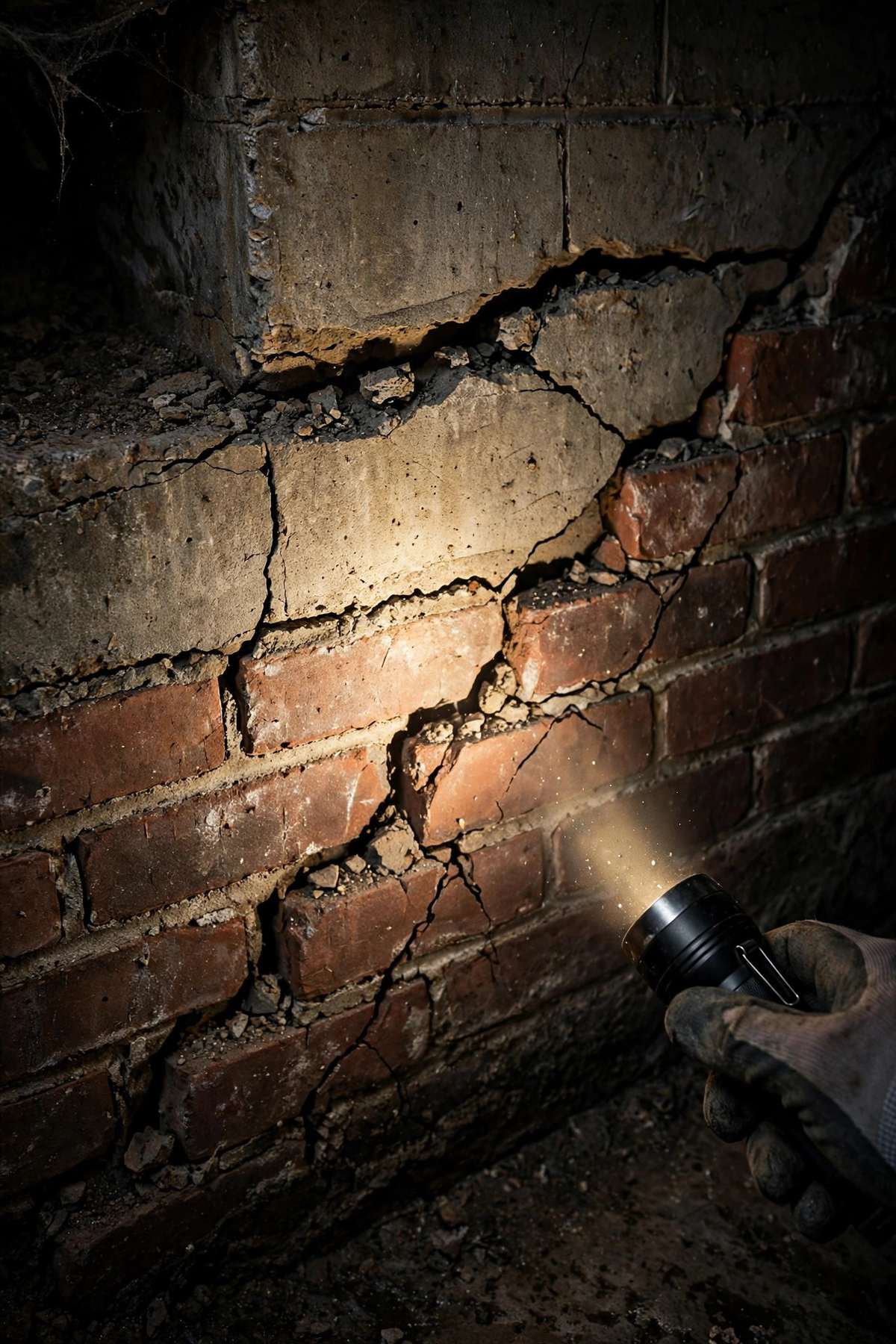
Washington is a brick city — row houses, colonials and older homes across the District wear brick over block or stone foundations. When part of a foundation settles unevenly, the brick above often cracks in a distinctive zigzag that follows the mortar joints: the stair-step crack. It is one of the clearest exterior signs of foundation movement, but it is not a diagnosis by itself. This guide explains why stair-step cracks form, how to document them, what a professional looks for, and the repair paths that address the movement rather than just the mortar.
Brick and mortar are rigid. When the foundation below drops or shifts unevenly, the wall cannot flex, so it relieves the stress along its weakest path — the mortar joints — producing the staircase pattern. The crack usually widens toward the direction of movement and often appears near corners, additions or openings where the structure is least supported. Matching cracks on the inside of the same wall, or doors racking nearby, confirm the movement is structural rather than surface-level.
Photograph the full crack and take close-ups with a coin or ruler for scale. Mark the crack ends with a dated pencil line on the mortar and check monthly. Note what else you see: sticking doors on that side, floor slope, gaps at the porch. This record matters because it separates an old, stable crack — possibly from construction-era settlement — from an active one. Repointing the mortar before you know whether the wall is still moving just hides the evidence and guarantees the crack returns.
An evaluator maps all cracks, checks floor elevations with a level or altimeter, inspects the basement or crawl space side of the wall, and looks at drainage and soil conditions outside. In DC row houses they also consider the neighbor effect: shared party walls and adjacent excavation or additions can influence movement. The output should be a clear statement of cause — settlement, soil shrinkage, water, or deterioration — and the options that match it, from monitoring to underpinning.
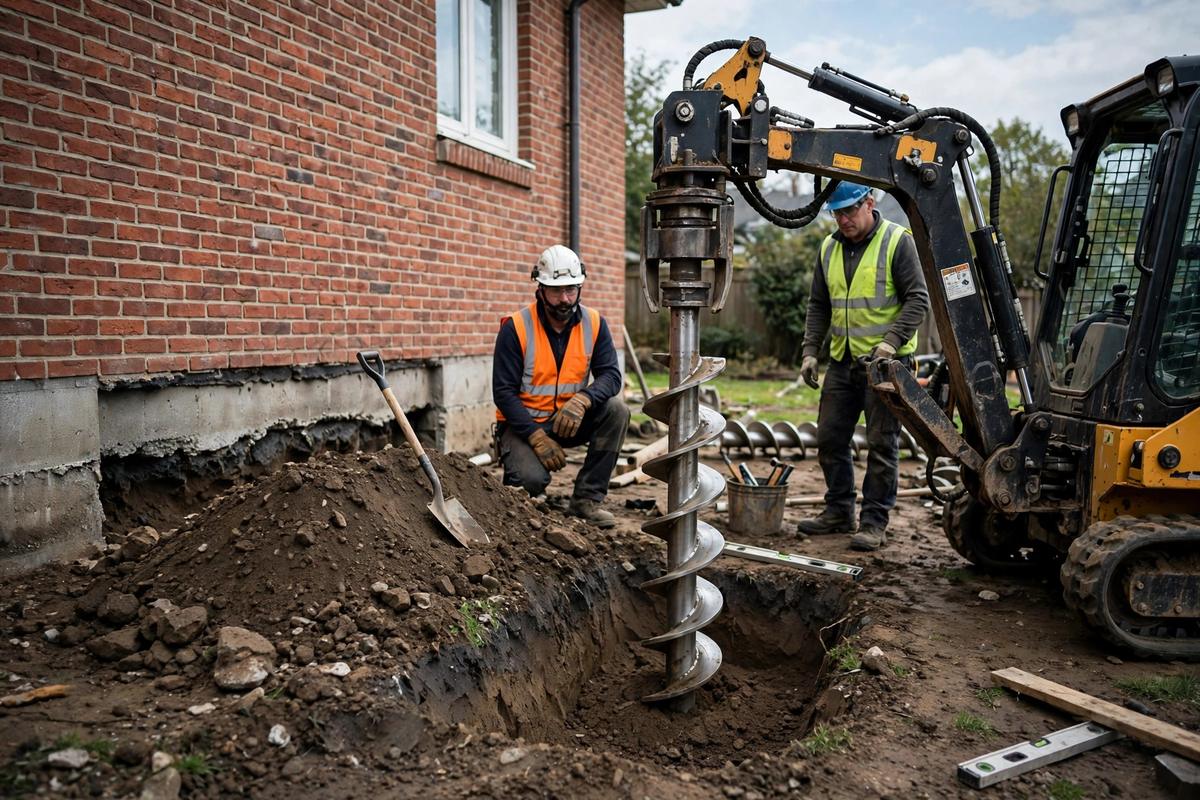
Stable, old cracks may only need repointing with matching mortar after the cause is confirmed inactive. Active settlement typically calls for stabilization — helical or push piers installed to competent soil so the footing stops moving — after which mortar work makes sense. Where soil moisture swings are the driver, drainage correction and grading may be part of the plan. Any provider should explain the sequence: stabilize first, cosmetics second.
It is also worth remembering how much Washington housing varies within a few blocks. A single street can hold 1890s brick row houses on stone foundations, 1920s colonials on block, post-war homes on poured concrete and recent construction with modern drainage — each aging differently under the same weather. Clay content in the soil changes across the District as well, which is why two neighbors can have genuinely different foundation experiences. Local providers see that variety every week, and their pattern recognition matters: they know which neighborhoods sit on troublesome soil, which eras of construction used which foundation materials, and which repair methods have proven themselves on each. When you read general national advice about foundations, translate it through that local lens — or better, ask a provider who works in Washington to translate it for your address.
For the services behind this guide, start with our foundation services in Washington, DC overview, compare foundation repair with a professional foundation inspection, or go straight to foundation repair in Washington, DC on the homepage.
Whatever you decide, three habits protect homeowners: get the scope in writing with methods and areas named; clarify what happens if hidden conditions are found once work opens the wall or soil; and keep every document — evaluation, contract, diagrams, warranty papers — in one file for the day you sell or refinance. If you would like the first step handled for you, DC Foundation Pros exists for exactly that: call (202) 449-5049, describe your home and what you have noticed, and we will connect you with an independent local foundation provider. There is no obligation — just a shorter path from worry to a professional, documented opinion.
Calling DC Foundation Pros takes a few minutes. We ask what you have noticed — when it started, whether it is changing, which part of the house is involved — and where in Washington you are. We then match you with an independent local provider whose work fits the problem: repair, waterproofing, stabilization, drainage or evaluation. You speak with the provider directly, schedule the inspection at a time that suits you, and receive their findings and any proposal in writing. The decision to proceed, and every term of the work, is between you and the provider. The referral itself is free, the lines are answered around the clock, and there is no obligation at any point — the service exists to replace a week of searching and callbacks with one conversation.
Crack injection in a day, piers in days, waterproofing in between — realistic timeline ranges and the factors that stretch them.
Read the guide →
Both approaches keep basements dry, but they work differently, cost differently and suit different houses. An honest comparison for DC homeowners.
Read the guide →
Primary pumps, battery backups and discharge lines — how sump systems work, why backups matter in DC storms, and the maintenance that keeps them ready.
Read the guide → DC Foundation Pros
Call DC Foundation Pros now and we will connect you with an independent local foundation provider in Washington, DC — no pressure, no obligation. Lines are open 24/7.