Row House Foundation Problems Common in Washington, DC
Shared party walls, stone and brick foundations, tight lots and a century of additions — the foundation issues specific to DC row houses.
Read the guide →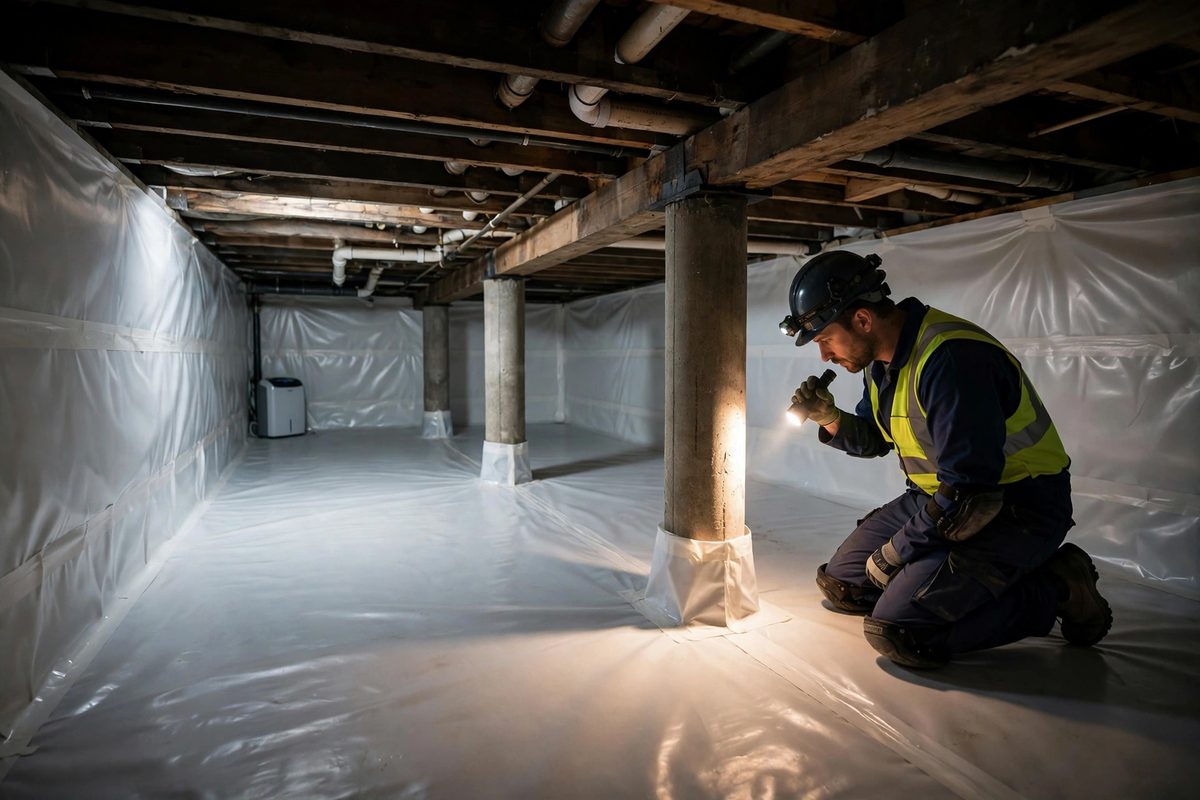
Many Washington homes — especially older houses outside the row-house core — sit over crawl spaces that were built to be vented and forgotten. In practice, vented crawl spaces in our humid climate pull in moist summer air that condenses on cool joists and ducts, feeding mold, wood rot and musty odors upstairs. Crawl space encapsulation seals and conditions that space instead. This guide explains what encapsulation includes, the problems it solves, and the structural repairs that should come before the liner goes down.
A complete encapsulation cleans out debris, addresses any standing water with drainage and sometimes a sump pump, then covers the floor and lower walls with a heavy, sealed vapor barrier. Vents are sealed, the access door is fitted tightly, and a dehumidifier or conditioned-air supply keeps humidity in a controlled range. Seams are taped and edges are sealed to piers and walls — the details matter, because a loose liner with gaps is a floor covering, not encapsulation.
Encapsulation targets moisture at its source: ground vapor and humid air. Homeowners typically pursue it for musty odors, mold growth on joists, cupping hardwood floors, high indoor humidity, cold floors in winter and pest pressure. It also protects the structure — floor joists, sill plates and support beams stay dry instead of cycling through wet seasons that soften wood and invite decay and insects.
Encapsulation is not a cover for structural problems. Sagging floors, damaged joists, undersized or settled support piers and active plumbing leaks should be repaired before or during the project, while access is easy. A good contractor inspects the structure first, photographs any damage, and sequences the work honestly. Likewise, grading and downspouts outside should direct water away; no interior system should be asked to fight a yard that drains toward the house.
Signs that point toward encapsulation include visible mold or moisture in the crawl space, a torn or missing vapor barrier, insulation falling from between joists, and persistent musty smells. If your crawl space is dry, clean and already well sealed, a simpler vapor barrier renewal may be enough. An inspection — which a local provider can do through DC Foundation Pros — will show which situation you have, with photos from under your own house.
Washington adds local wrinkles to every foundation topic on this page. Much of the District's housing predates poured-concrete foundations: brick and rubble-stone foundation walls, shared party walls in row houses, and cellars that were never designed as living space now serve as finished lower levels. Soils across much of the city carry clay that swells when wet and shrinks in drought, and winters cycle through freeze and thaw often enough to ratchet small cracks wider season after season. Intense summer downpours complete the picture, delivering roof and yard water faster than aging drainage can move it. Advice that ignores those conditions misses the point — the right choice for a Capitol Hill row house is not automatically the right choice for a detached home in Chevy Chase, and any provider worth hiring will ask about your specific house, its era and its walls before recommending a direction.
For the services behind this guide, start with our foundation services in Washington, DC overview, compare foundation repair with a professional foundation inspection, or go straight to foundation repair in Washington, DC on the homepage.
Nearly every foundation question eventually becomes a choice between repair, stabilization, waterproofing or monitoring — and the wrong sequence wastes money. Cosmetic repairs made before movement is stabilized simply fail again; waterproofing installed against the wrong water source disappoints; piers installed where drainage correction would have sufficed overspend the problem. The reliable order is diagnosis first: measured elevations, mapped cracks, an identified water source, and a written statement of whether the condition is active or historical. With that in hand, the options price themselves honestly, and you can compare providers on identical scope. Insist on documentation rather than adjectives — a provider who measures and photographs is a provider whose recommendation you can test.
Calling DC Foundation Pros takes a few minutes. We ask what you have noticed — when it started, whether it is changing, which part of the house is involved — and where in Washington you are. We then match you with an independent local provider whose work fits the problem: repair, waterproofing, stabilization, drainage or evaluation. You speak with the provider directly, schedule the inspection at a time that suits you, and receive their findings and any proposal in writing. The decision to proceed, and every term of the work, is between you and the provider. The referral itself is free, the lines are answered around the clock, and there is no obligation at any point — the service exists to replace a week of searching and callbacks with one conversation.
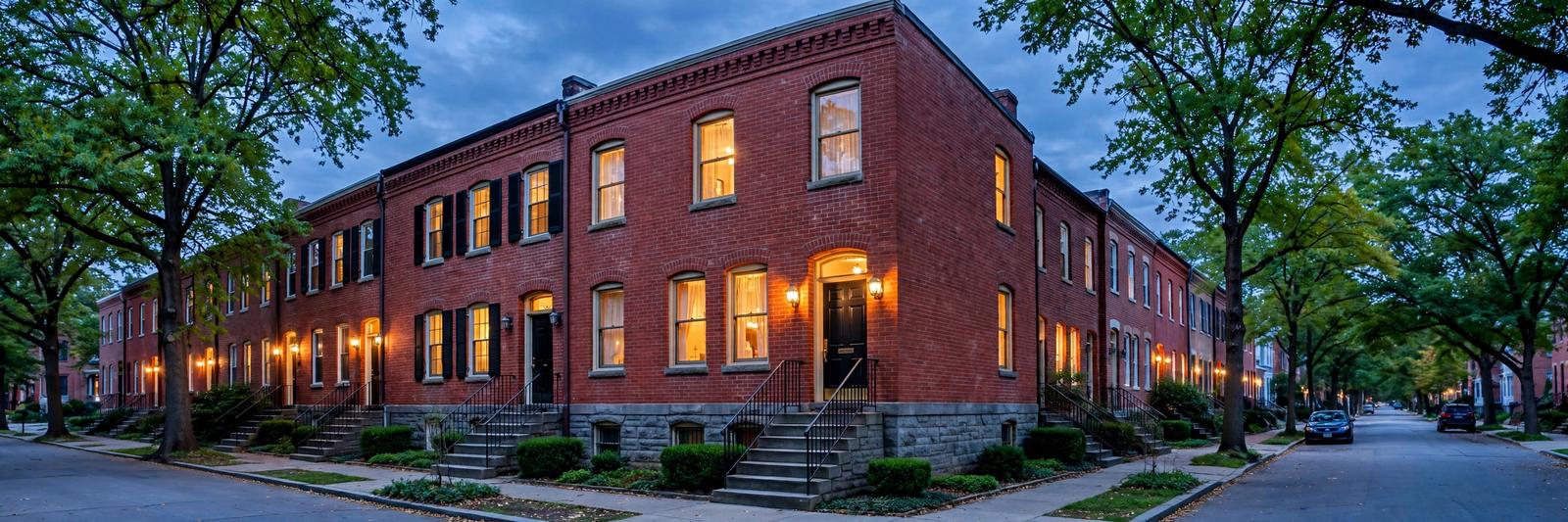
Shared party walls, stone and brick foundations, tight lots and a century of additions — the foundation issues specific to DC row houses.
Read the guide →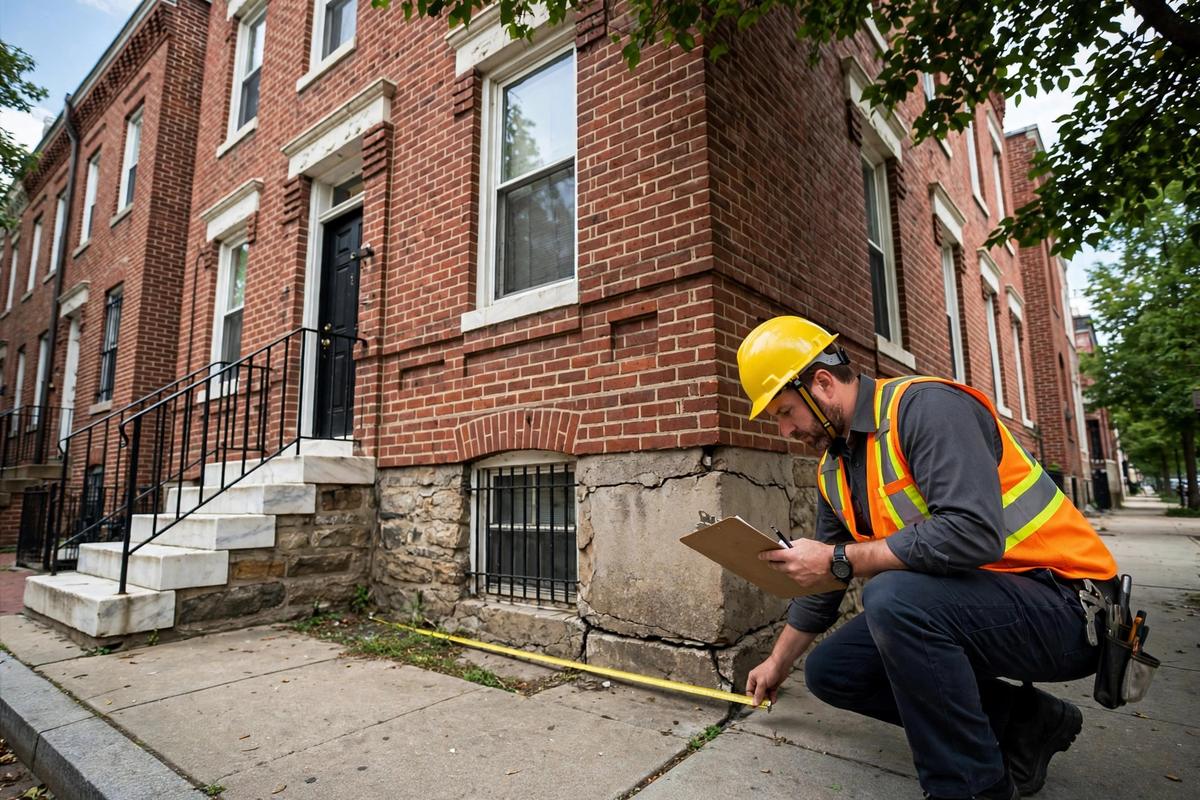
Structural foundation work in the District often needs permits and inspections. What typically requires approval, and how the process usually runs.
Read the guide →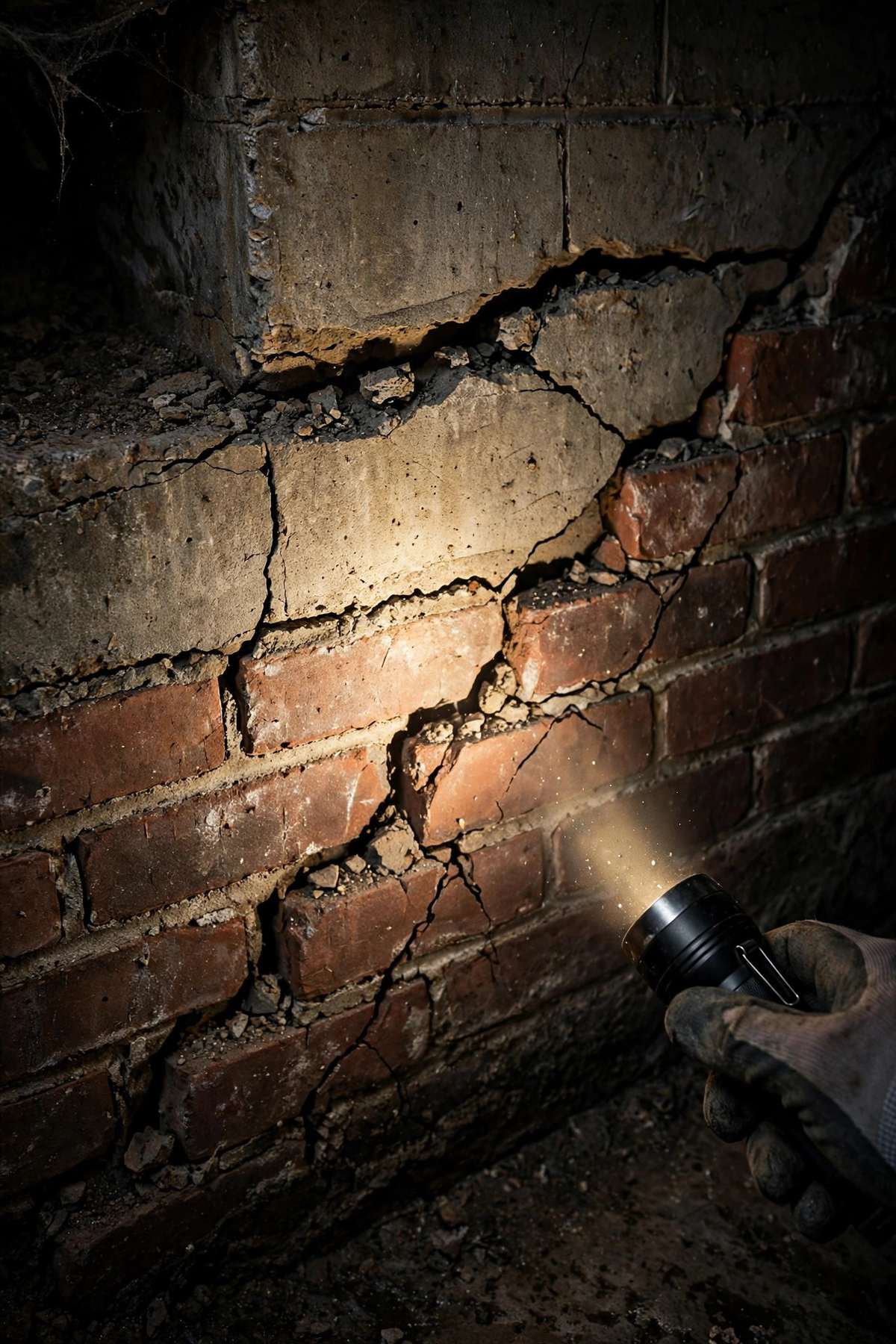
Water expands when it freezes, and that simple fact pries at cracks, soil and mortar all winter. How freeze-thaw works and how to blunt it.
Read the guide → DC Foundation Pros
Call DC Foundation Pros now and we will connect you with an independent local foundation provider in Washington, DC — no pressure, no obligation. Lines are open 24/7.