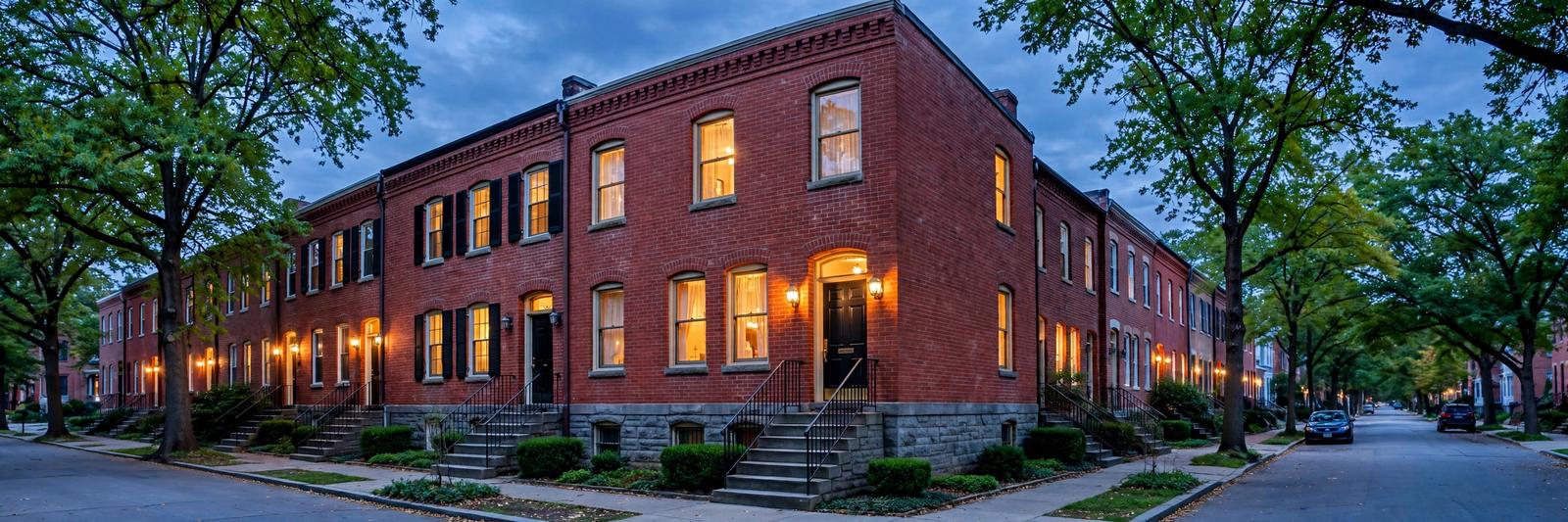
Washington's row houses are beautiful, durable and — from a foundation standpoint — a category of their own. Built from the late 1800s through the early 1900s, many stand on brick or stone foundations, share walls with neighbors, and have collected additions, underpinned sections and a century of plumbing and drainage changes. Their foundation problems follow those facts. This guide covers the issues DC row house owners encounter most, how shared walls change the repair picture, and what to ask before work begins on a house that is attached to two others.
Brick and Stone Foundations Age Differently
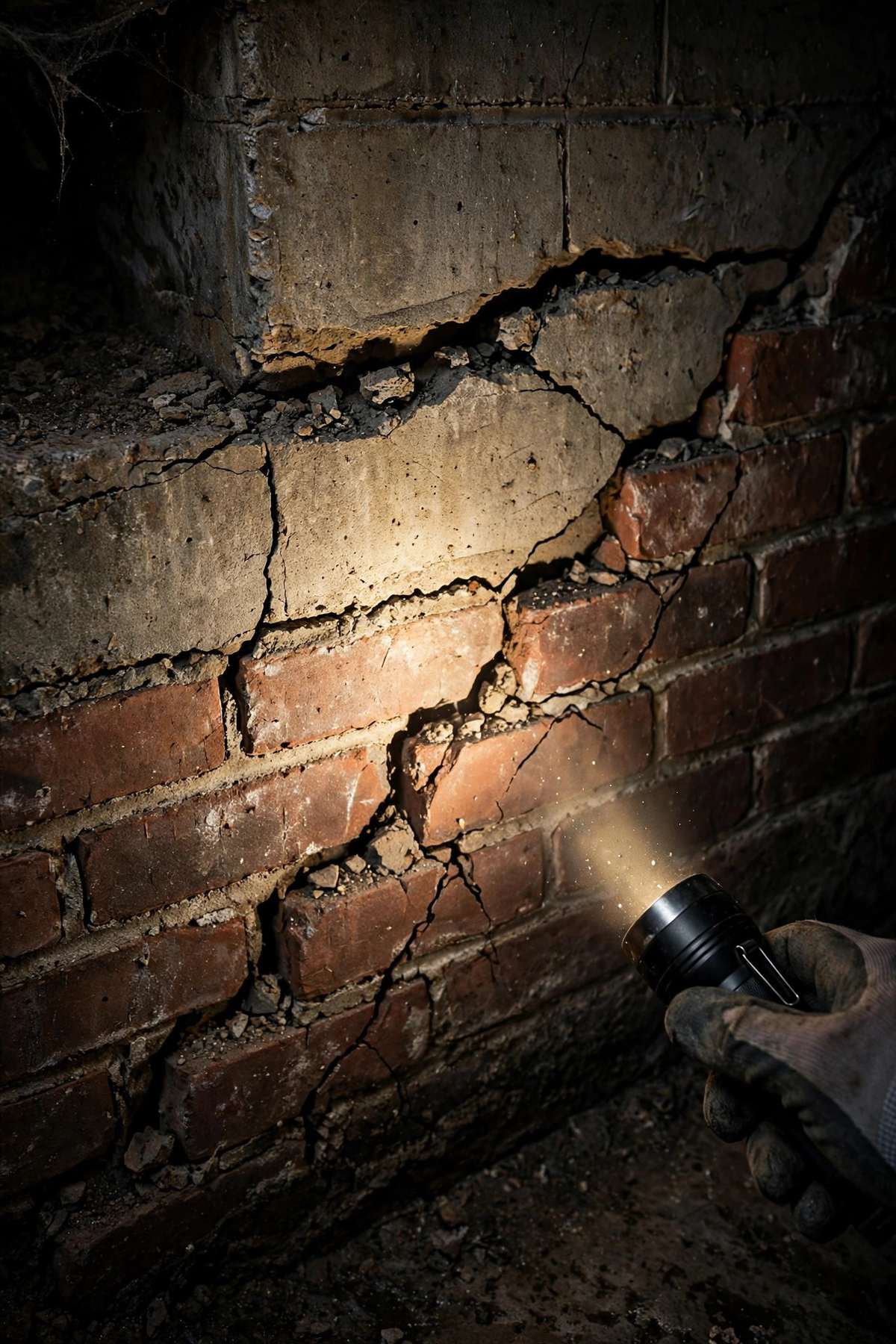
Many row houses rest on brick or rubble-stone foundation walls rather than poured concrete. These walls are strong in compression but depend on their mortar, which softens and erodes over decades — especially where water has run through it. Repointing, parging and localized rebuilding are routine maintenance for these walls, and deterioration left alone can progress to bulging or displaced sections. They also respond poorly to aggressive methods designed for modern concrete, which is why the provider's experience with historic foundations matters.
Party Walls and the Neighbor Effect
Your row house shares its side walls and often its drainage patterns with the houses on either side. Settlement in an adjoining house, a neighbor's excavation or addition, or a shared downspout problem can show up in your home. Repairs may need coordination across property lines, and some methods — like exterior wall anchors — need yard that a row house simply does not have. Interior solutions (drainage systems, bracing, carbon fiber) are therefore common in DC row house work.
Water: the Row House Constant
Row house basements collect water from rooflines shared across several houses, rear yards that slope toward the back wall, and original clay or cast-iron drainage that has aged out. Interior perimeter drainage with a sump pump is the workhorse solution, paired with gutter and downspout discipline on the roof you control. Cellar-level living space — common in DC — raises the stakes: a finished lower level deserves a backup pump and a plan for outages during storms.
Planning Work on an Attached Home
Ask how excavation will be handled in tight side yards (often by hand), how shared walls will be protected, what permits the District requires for the scope, and how the work affects — and is affected by — the neighbors' foundations. Get the diagnosis in writing with photos. Through DC Foundation Pros you can connect with providers who work on DC row houses regularly and understand party walls, historic masonry and interior waterproofing in attached homes.
The Washington, DC Context
It is also worth remembering how much Washington housing varies within a few blocks. A single street can hold 1890s brick row houses on stone foundations, 1920s colonials on block, post-war homes on poured concrete and recent construction with modern drainage — each aging differently under the same weather. Clay content in the soil changes across the District as well, which is why two neighbors can have genuinely different foundation experiences. Local providers see that variety every week, and their pattern recognition matters: they know which neighborhoods sit on troublesome soil, which eras of construction used which foundation materials, and which repair methods have proven themselves on each. When you read general national advice about foundations, translate it through that local lens — or better, ask a provider who works in Washington to translate it for your address.
For the services behind this guide, start with our foundation services in
Washington, DC overview, compare foundation repair with
a professional foundation inspection, or go straight to
foundation repair in Washington, DC on the homepage.
Getting the Next Step Right
Whatever you decide, three habits protect homeowners: get the scope in writing with methods and areas named; clarify what happens if hidden conditions are found once work opens the wall or soil; and keep every document — evaluation, contract, diagrams, warranty papers — in one file for the day you sell or refinance. If you would like the first step handled for you, DC Foundation Pros exists for exactly that: call (202) 449-5049, describe your home and what you have noticed, and we will connect you with an independent local foundation provider. There is no obligation — just a shorter path from worry to a professional, documented opinion.
What Happens When You Call
Calling DC Foundation Pros takes a few minutes. We ask what you have noticed — when it started, whether it is changing, which part of the house is involved — and where in Washington you are. We then match you with an independent local provider whose work fits the problem: repair, waterproofing, stabilization, drainage or evaluation. You speak with the provider directly, schedule the inspection at a time that suits you, and receive their findings and any proposal in writing. The decision to proceed, and every term of the work, is between you and the provider. The referral itself is free, the lines are answered around the clock, and there is no obligation at any point — the service exists to replace a week of searching and callbacks with one conversation.