How Much Does Foundation Repair Cost in Washington, DC?
No honest price exists without an inspection — but the factors that move a foundation repair estimate are knowable. Here is what drives the number in DC.
Read the guide →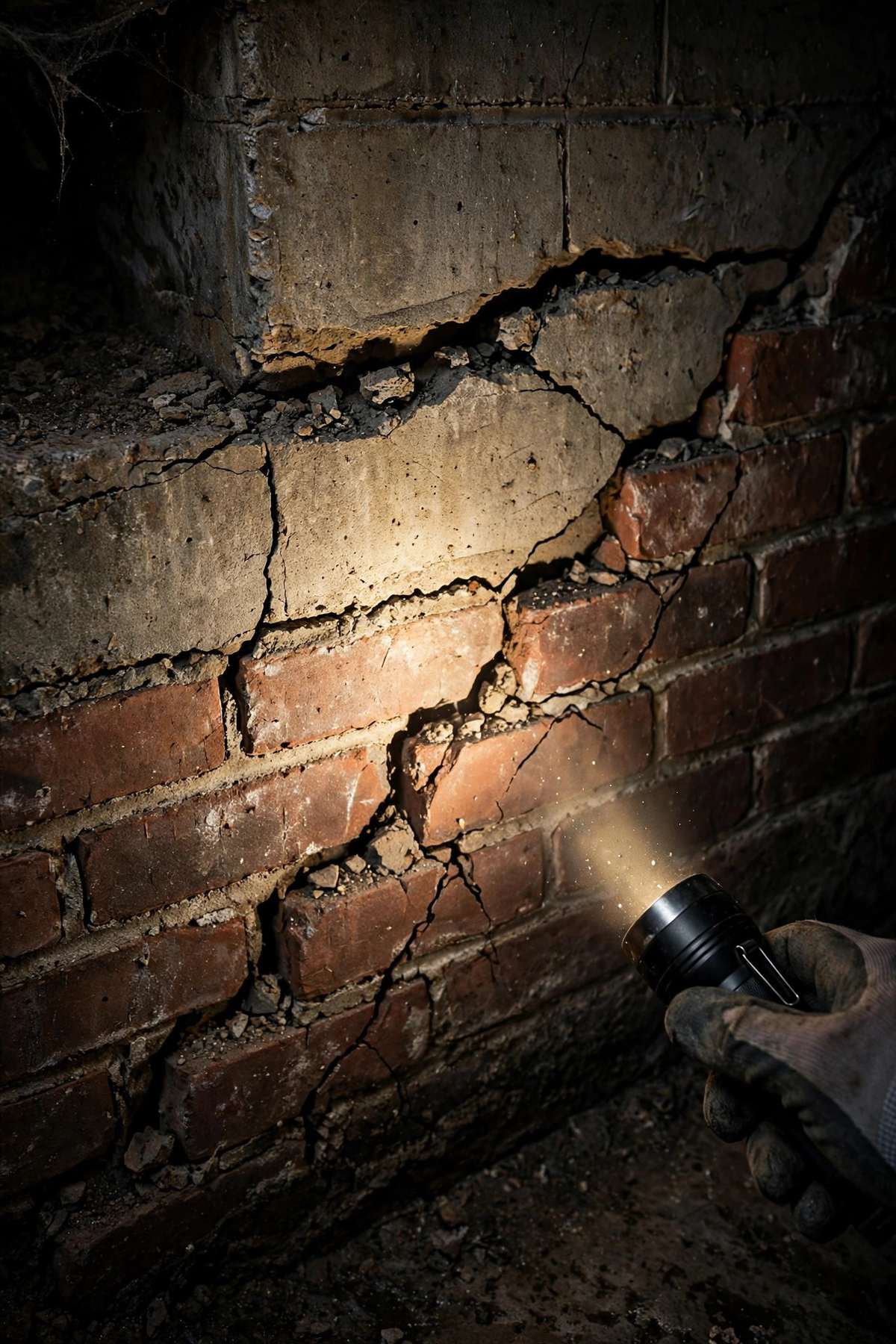
A basement wall is a retaining wall holding back tons of soil, and soil pushes back — especially clay soil saturated with water, which becomes dramatically heavier and more forceful. Over years that pressure can bow a block or poured wall inward, announced by horizontal cracks and a visible curve. Bowing walls are common in Washington's older housing stock, and they are fixable — but the right repair depends on how far the wall has moved. This guide explains the causes, how professionals measure displacement, and the main repair options.
The main driver is lateral soil pressure, amplified by water: poor drainage, clogged gutters, downspouts discharging at the wall and yards graded toward the house all load the soil with water. Freeze-thaw cycles add ratcheting pressure in winter. Hydrostatic pressure is why bowing often pairs with basement leaks along the same wall. Tree roots and heavy loads near the foundation — parked vehicles, additions — can contribute. Correcting drainage is therefore part of almost every wall repair plan, not an optional extra.
Professionals check plumb with a level or laser, or stretch a string along the wall to measure the inward deflection at its worst point. They also record horizontal or stair-step cracking, shearing at the base, and whether the wall has moved at the top. The amount of displacement drives the repair choice, which is why any proposal should state the measurement. Photographing and dating the measurement lets you verify stability after repair — or catch continued movement early in a home you are evaluating.
For walls with modest movement, carbon fiber straps bonded to the wall can arrest further bowing — a low-profile fix with no exterior digging. Wall anchor systems connect the wall to steel plates buried in stable soil in the yard and can, in some cases, gradually straighten a wall over time; they need yard space, which DC lots may or may not offer. Interior steel bracing suits situations where exterior access is impossible. Severely displaced or deteriorated walls may need partial rebuilding — an honest contractor will say so.
Do not simply patch the cracks or panel over the wall — cosmetics hide the gauge you need to watch. Do not finish the basement against a bowing wall before it is stabilized. And do not accept a proposal that skips drainage corrections; reinforcing a wall while leaving the water load that bowed it is a half-repair. A local evaluation through DC Foundation Pros will measure your wall, explain the options that fit its displacement, and put the plan in writing.
Washington adds local wrinkles to every foundation topic on this page. Much of the District's housing predates poured-concrete foundations: brick and rubble-stone foundation walls, shared party walls in row houses, and cellars that were never designed as living space now serve as finished lower levels. Soils across much of the city carry clay that swells when wet and shrinks in drought, and winters cycle through freeze and thaw often enough to ratchet small cracks wider season after season. Intense summer downpours complete the picture, delivering roof and yard water faster than aging drainage can move it. Advice that ignores those conditions misses the point — the right choice for a Capitol Hill row house is not automatically the right choice for a detached home in Chevy Chase, and any provider worth hiring will ask about your specific house, its era and its walls before recommending a direction.
For the services behind this guide, start with our foundation services in Washington, DC overview, compare foundation repair with a professional foundation inspection, or go straight to foundation repair in Washington, DC on the homepage.
Nearly every foundation question eventually becomes a choice between repair, stabilization, waterproofing or monitoring — and the wrong sequence wastes money. Cosmetic repairs made before movement is stabilized simply fail again; waterproofing installed against the wrong water source disappoints; piers installed where drainage correction would have sufficed overspend the problem. The reliable order is diagnosis first: measured elevations, mapped cracks, an identified water source, and a written statement of whether the condition is active or historical. With that in hand, the options price themselves honestly, and you can compare providers on identical scope. Insist on documentation rather than adjectives — a provider who measures and photographs is a provider whose recommendation you can test.
Calling DC Foundation Pros takes a few minutes. We ask what you have noticed — when it started, whether it is changing, which part of the house is involved — and where in Washington you are. We then match you with an independent local provider whose work fits the problem: repair, waterproofing, stabilization, drainage or evaluation. You speak with the provider directly, schedule the inspection at a time that suits you, and receive their findings and any proposal in writing. The decision to proceed, and every term of the work, is between you and the provider. The referral itself is free, the lines are answered around the clock, and there is no obligation at any point — the service exists to replace a week of searching and callbacks with one conversation.
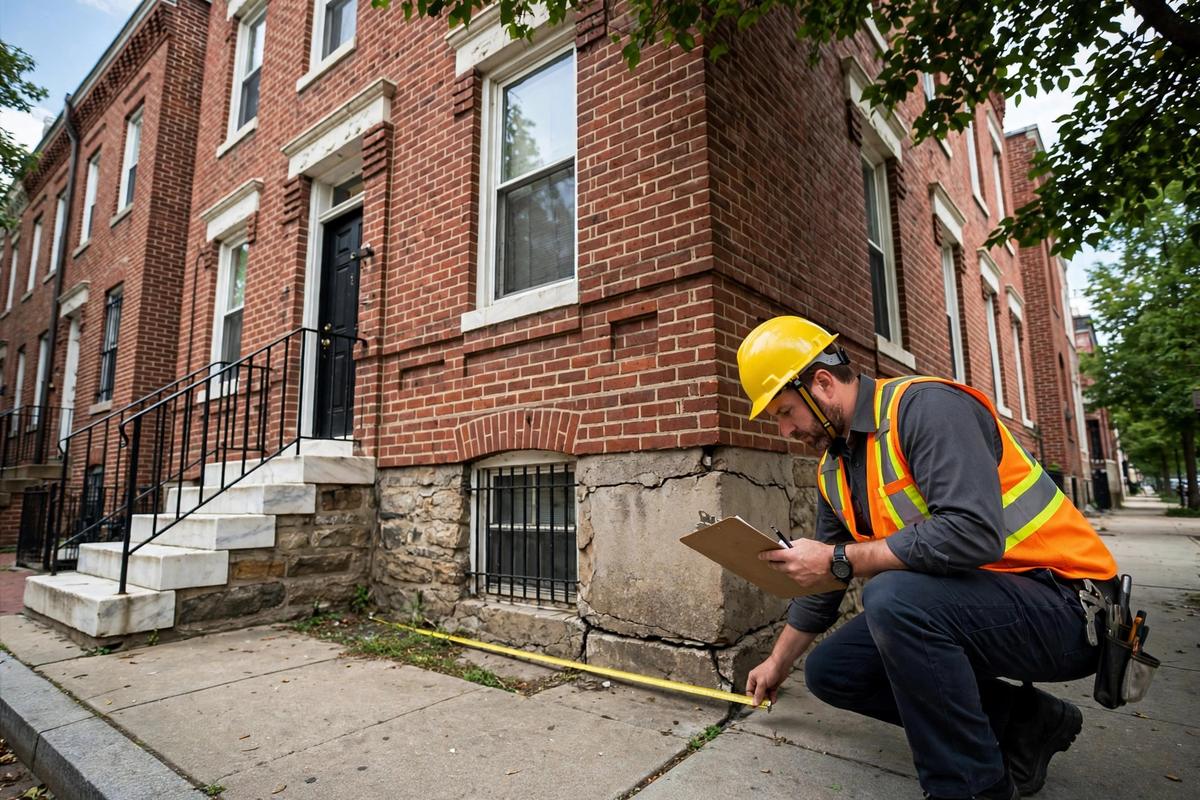
No honest price exists without an inspection — but the factors that move a foundation repair estimate are knowable. Here is what drives the number in DC.
Read the guide →
That zigzag crack climbing your brickwork is your foundation talking. What causes stair-step cracks in DC's brick homes, and the steps to take.
Read the guide →
Crack mapping, floor elevation checks, drainage review and a written report — step by step through a professional foundation inspection.
Read the guide → DC Foundation Pros
Call DC Foundation Pros now and we will connect you with an independent local foundation provider in Washington, DC — no pressure, no obligation. Lines are open 24/7.