Interior vs. Exterior Basement Waterproofing: Which Does Your Home Need?
Both approaches keep basements dry, but they work differently, cost differently and suit different houses. An honest comparison for DC homeowners.
Read the guide →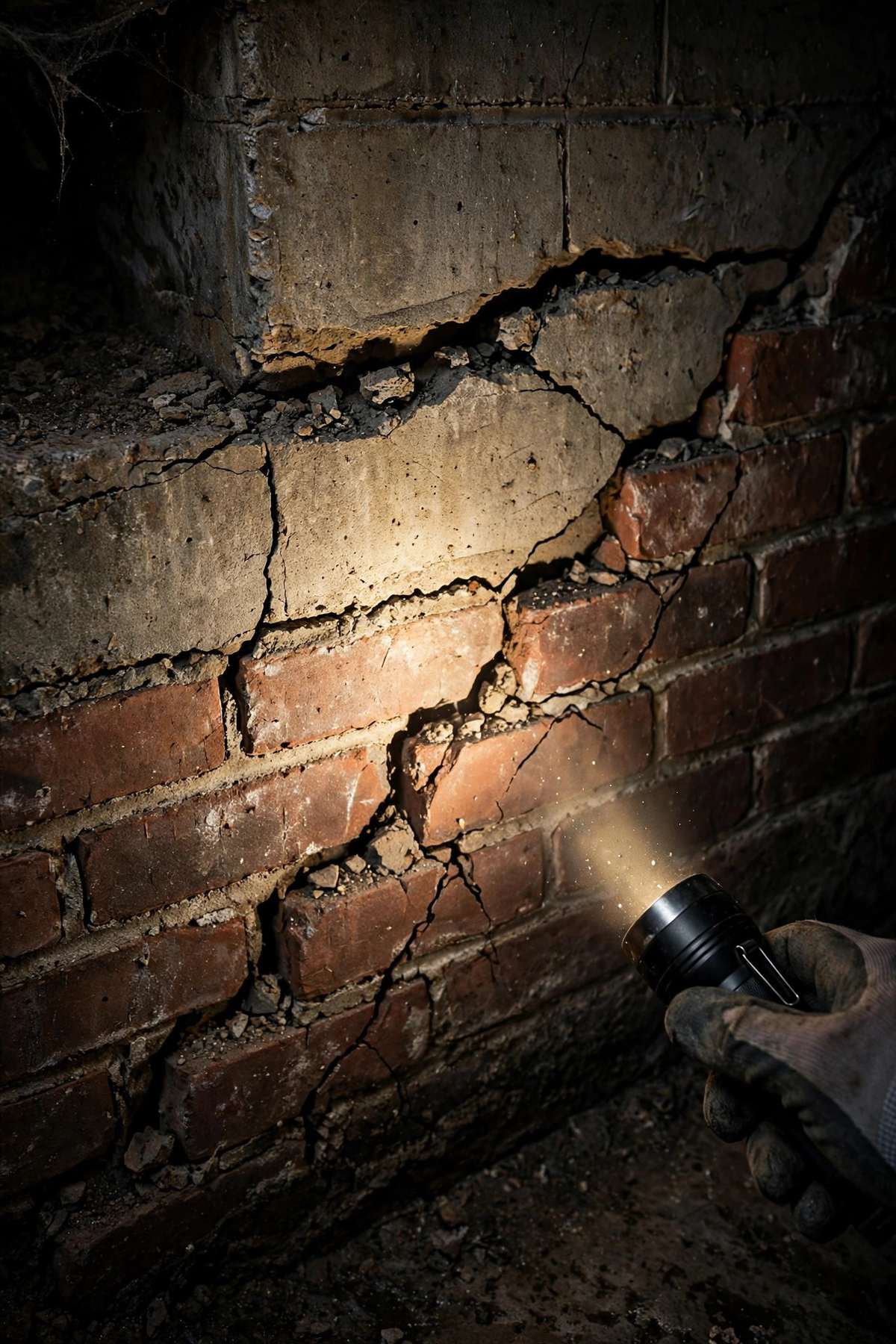
Not all foundation cracks are equal, and the direction a crack runs is one of the best clues to what is causing it. Vertical cracks often trace back to concrete curing or minor settlement. Horizontal cracks usually mean soil pressure is pushing the wall inward — a more serious story. Stair-step cracks through masonry point to uneven settlement. This guide explains each crack type, where it typically appears in Washington homes, how professionals assess it, and which repair methods match which cause.
Concrete shrinks slightly as it cures, so thin vertical cracks in poured foundations are extremely common and often purely cosmetic. Vertical cracks that leak during rain still need sealing, because water entry erodes the wall and rusts reinforcement over time. The warning version is a vertical crack that is wider at one end than the other, or one that keeps growing — that taper suggests the two sides are moving differently, which points to settlement rather than shrinkage.
A horizontal crack running along a block or poured wall — especially at mid-height — usually means the soil outside is pressing the wall inward. Wet, heavy clay soil and freeze-thaw cycles increase that pressure, and the wall begins to bow. Horizontal cracks deserve prompt professional attention, because a wall that has started to move inward will not improve on its own. Fixes range from carbon fiber reinforcement for early movement to wall anchors or bracing for larger displacement.
In brick and block, cracks follow the mortar in a stair-step pattern when one section of foundation settles more than the rest. Diagonal cracks radiating from window and door corners tell a similar story inside. The pattern matters: stair-stepping that mirrors on the inside and outside of the same wall confirms the movement runs through the structure. Professionals measure the offset across the crack — if one side sticks out beyond the other, the wall or footing has shifted, not just cracked.
Sealing and injection (epoxy for structural bonding, polyurethane for leaking cracks) suit cracks where the cause has stopped. Cracks caused by ongoing pressure or settlement need the cause corrected first — reinforcement, anchors or piers — or the crack simply reopens. A good evaluation therefore starts with diagnosis, not a tube of sealant. If you are unsure which type you are looking at, a foundation inspection will classify it and document its width for future comparison.
Washington adds local wrinkles to every foundation topic on this page. Much of the District's housing predates poured-concrete foundations: brick and rubble-stone foundation walls, shared party walls in row houses, and cellars that were never designed as living space now serve as finished lower levels. Soils across much of the city carry clay that swells when wet and shrinks in drought, and winters cycle through freeze and thaw often enough to ratchet small cracks wider season after season. Intense summer downpours complete the picture, delivering roof and yard water faster than aging drainage can move it. Advice that ignores those conditions misses the point — the right choice for a Capitol Hill row house is not automatically the right choice for a detached home in Chevy Chase, and any provider worth hiring will ask about your specific house, its era and its walls before recommending a direction.
For the services behind this guide, start with our foundation services in Washington, DC overview, compare foundation repair with a professional foundation inspection, or go straight to foundation repair in Washington, DC on the homepage.
Nearly every foundation question eventually becomes a choice between repair, stabilization, waterproofing or monitoring — and the wrong sequence wastes money. Cosmetic repairs made before movement is stabilized simply fail again; waterproofing installed against the wrong water source disappoints; piers installed where drainage correction would have sufficed overspend the problem. The reliable order is diagnosis first: measured elevations, mapped cracks, an identified water source, and a written statement of whether the condition is active or historical. With that in hand, the options price themselves honestly, and you can compare providers on identical scope. Insist on documentation rather than adjectives — a provider who measures and photographs is a provider whose recommendation you can test.
Calling DC Foundation Pros takes a few minutes. We ask what you have noticed — when it started, whether it is changing, which part of the house is involved — and where in Washington you are. We then match you with an independent local provider whose work fits the problem: repair, waterproofing, stabilization, drainage or evaluation. You speak with the provider directly, schedule the inspection at a time that suits you, and receive their findings and any proposal in writing. The decision to proceed, and every term of the work, is between you and the provider. The referral itself is free, the lines are answered around the clock, and there is no obligation at any point — the service exists to replace a week of searching and callbacks with one conversation.
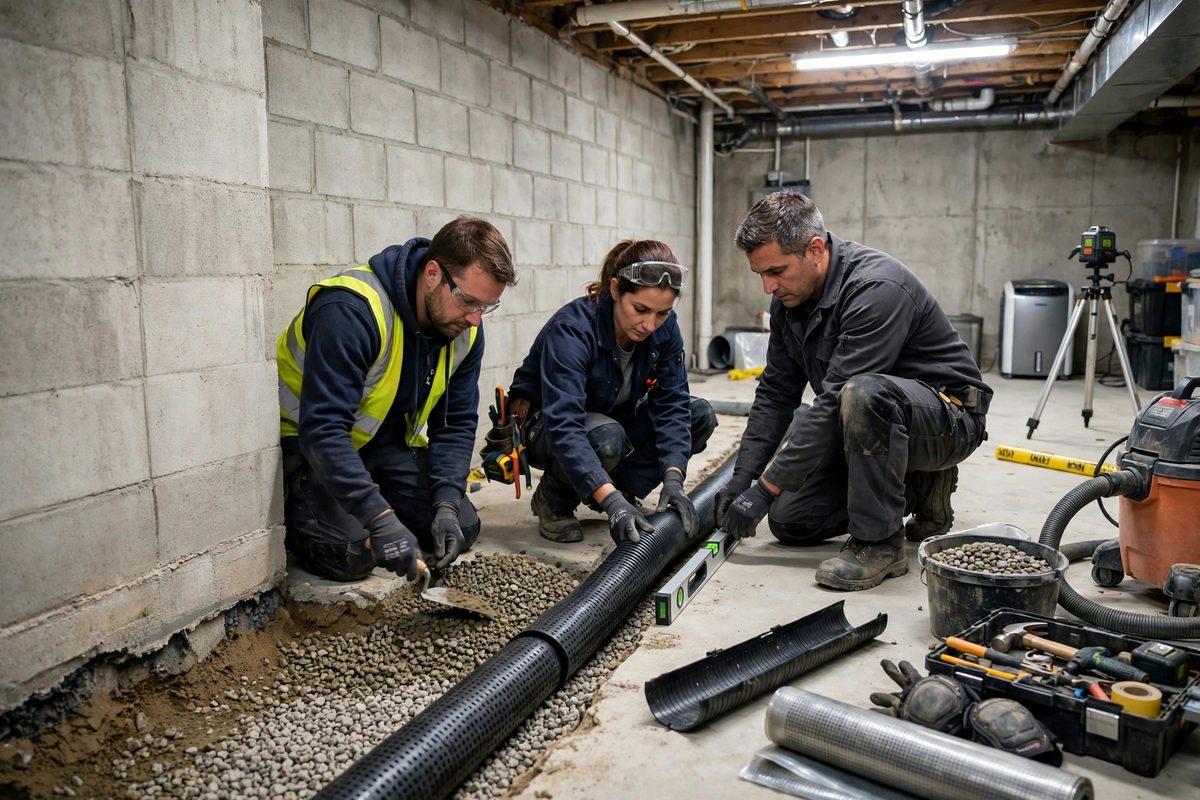
Both approaches keep basements dry, but they work differently, cost differently and suit different houses. An honest comparison for DC homeowners.
Read the guide →
Sudden cracks, a wall that moves, water pouring in — which foundation problems are genuine emergencies and the first steps to take.
Read the guide →
Water expands when it freezes, and that simple fact pries at cracks, soil and mortar all winter. How freeze-thaw works and how to blunt it.
Read the guide → DC Foundation Pros
Call DC Foundation Pros now and we will connect you with an independent local foundation provider in Washington, DC — no pressure, no obligation. Lines are open 24/7.