Foundation Work and Permits in Washington, DC: What Homeowners Should Know
Structural foundation work in the District often needs permits and inspections. What typically requires approval, and how the process usually runs.
Read the guide →
Foundation work is often sold with the word 'warranty' prominent and the details quiet. But warranties vary enormously: some cover the installed system against further movement of the treated area, others cover only materials, and the strongest promise is worth little if the company behind it cannot be found in ten years. Since we cannot speak for any individual provider's terms, this guide gives homeowners the questions that reveal what a specific warranty really means — so the document, not the adjective, drives the decision.
Ask which failure the warranty responds to. For piers: further settlement of the piered section, and by how much before it counts? For waterproofing: water entry through the treated system, from which sources? For wall reinforcement: additional movement beyond a stated tolerance? Get the covered conditions, the measurement standard and the remedy — repair, re-installation, refund — in writing. A warranty that covers 'the work' in general terms, without defined triggers, is hard to enforce and easy to argue about.
Warranties normally cover only the treated area and the installed system — new problems in untreated sections, damage from plumbing leaks, or movement caused by events like nearby excavation or earthquakes may be excluded. Cosmetic finishes are rarely covered. None of this is unreasonable, but it should be visible before signing, not discovered during a claim. Ask specifically: if the other side of the house settles later, what does this document say? The answer tells you how the company thinks.
If you may sell the home, a transferable warranty — and the paperwork process and any fee for transferring it — adds real resale value; buyers and agents ask for it. Also ask how long the provider has operated under its current name and how warranty service is requested and scheduled. Keep the warranty, the contract, the pier or system diagram and inspection records together; together they are the documentation package a future buyer wants to see.
Providers confident in their work explain their warranty plainly, including its limits, and put it in the contract rather than a brochure. Evasion on specifics is information. Through DC Foundation Pros you can connect with local foundation providers and compare not just their prices but their warranty documents side by side — coverage triggers, scope, transferability and track record — which is the comparison that protects you for the life of the repair.
It is also worth remembering how much Washington housing varies within a few blocks. A single street can hold 1890s brick row houses on stone foundations, 1920s colonials on block, post-war homes on poured concrete and recent construction with modern drainage — each aging differently under the same weather. Clay content in the soil changes across the District as well, which is why two neighbors can have genuinely different foundation experiences. Local providers see that variety every week, and their pattern recognition matters: they know which neighborhoods sit on troublesome soil, which eras of construction used which foundation materials, and which repair methods have proven themselves on each. When you read general national advice about foundations, translate it through that local lens — or better, ask a provider who works in Washington to translate it for your address.
For the services behind this guide, start with our foundation services in Washington, DC overview, compare foundation repair with a professional foundation inspection, or go straight to foundation repair in Washington, DC on the homepage.
Whatever you decide, three habits protect homeowners: get the scope in writing with methods and areas named; clarify what happens if hidden conditions are found once work opens the wall or soil; and keep every document — evaluation, contract, diagrams, warranty papers — in one file for the day you sell or refinance. If you would like the first step handled for you, DC Foundation Pros exists for exactly that: call (202) 449-5049, describe your home and what you have noticed, and we will connect you with an independent local foundation provider. There is no obligation — just a shorter path from worry to a professional, documented opinion.
Calling DC Foundation Pros takes a few minutes. We ask what you have noticed — when it started, whether it is changing, which part of the house is involved — and where in Washington you are. We then match you with an independent local provider whose work fits the problem: repair, waterproofing, stabilization, drainage or evaluation. You speak with the provider directly, schedule the inspection at a time that suits you, and receive their findings and any proposal in writing. The decision to proceed, and every term of the work, is between you and the provider. The referral itself is free, the lines are answered around the clock, and there is no obligation at any point — the service exists to replace a week of searching and callbacks with one conversation.
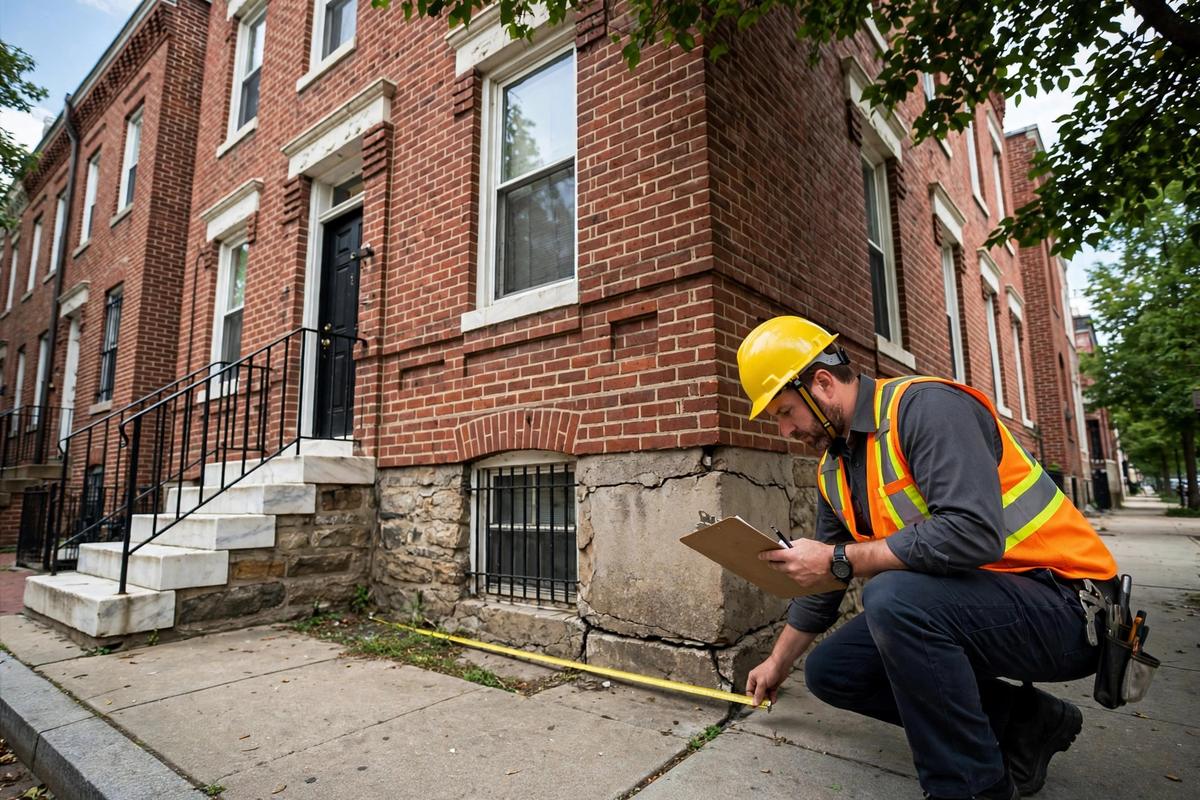
Structural foundation work in the District often needs permits and inspections. What typically requires approval, and how the process usually runs.
Read the guide →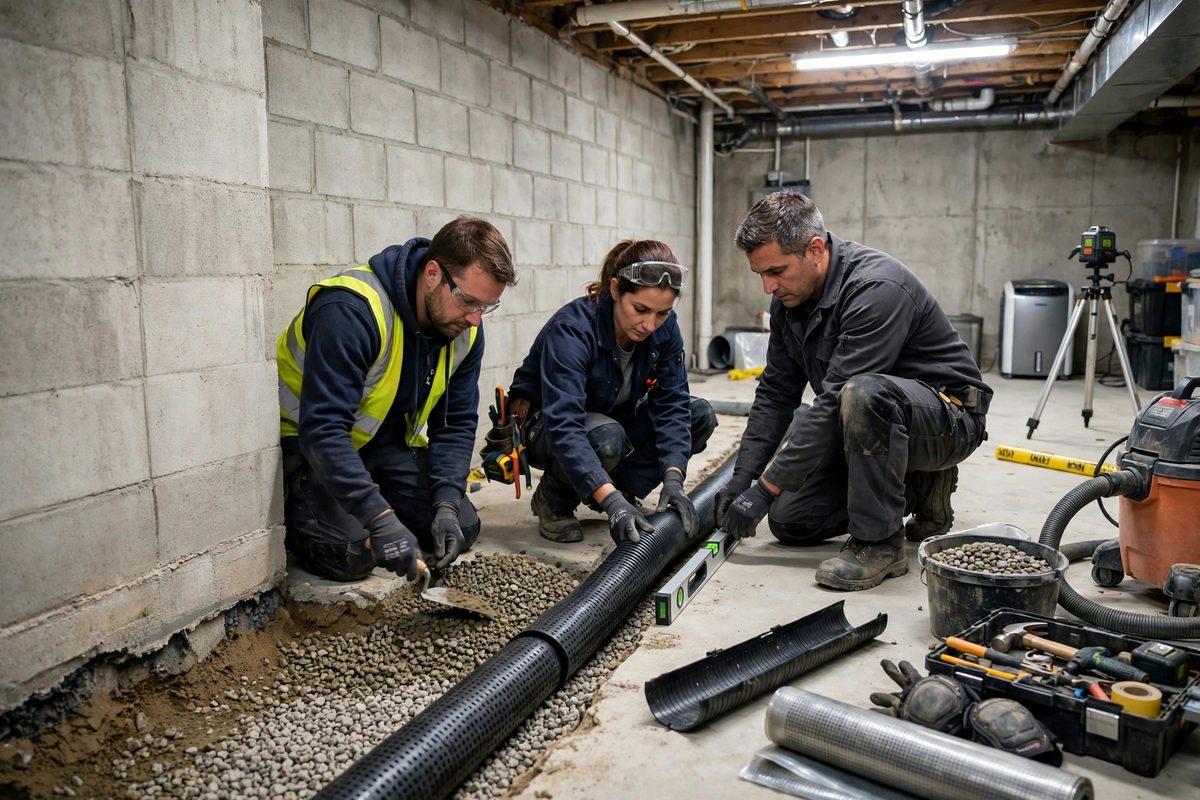
Primary pumps, battery backups and discharge lines — how sump systems work, why backups matter in DC storms, and the maintenance that keeps them ready.
Read the guide →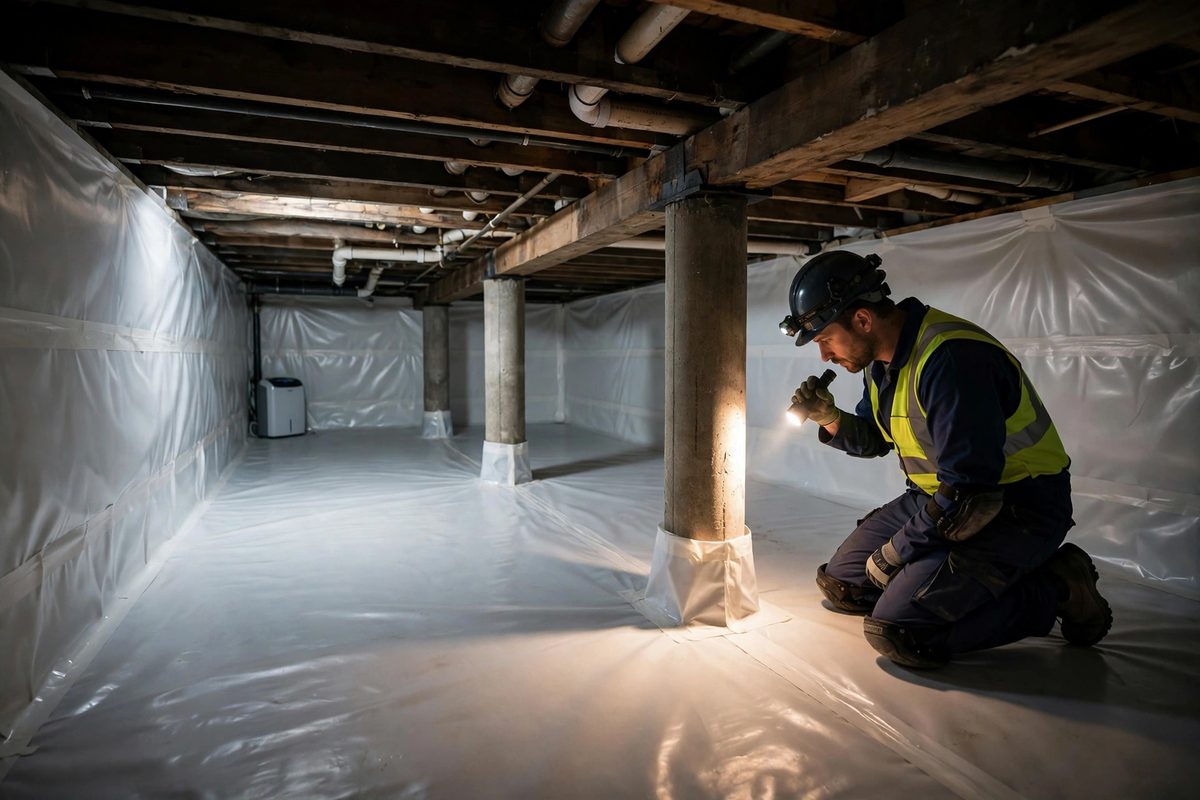
Vapor barriers, sealed vents, drainage and dehumidification — how encapsulation turns a damp crawl space into a clean, dry part of the house.
Read the guide → DC Foundation Pros
Call DC Foundation Pros now and we will connect you with an independent local foundation provider in Washington, DC — no pressure, no obligation. Lines are open 24/7.