Emergency Foundation Problems: What Counts and What to Do First
Sudden cracks, a wall that moves, water pouring in — which foundation problems are genuine emergencies and the first steps to take.
Read the guide →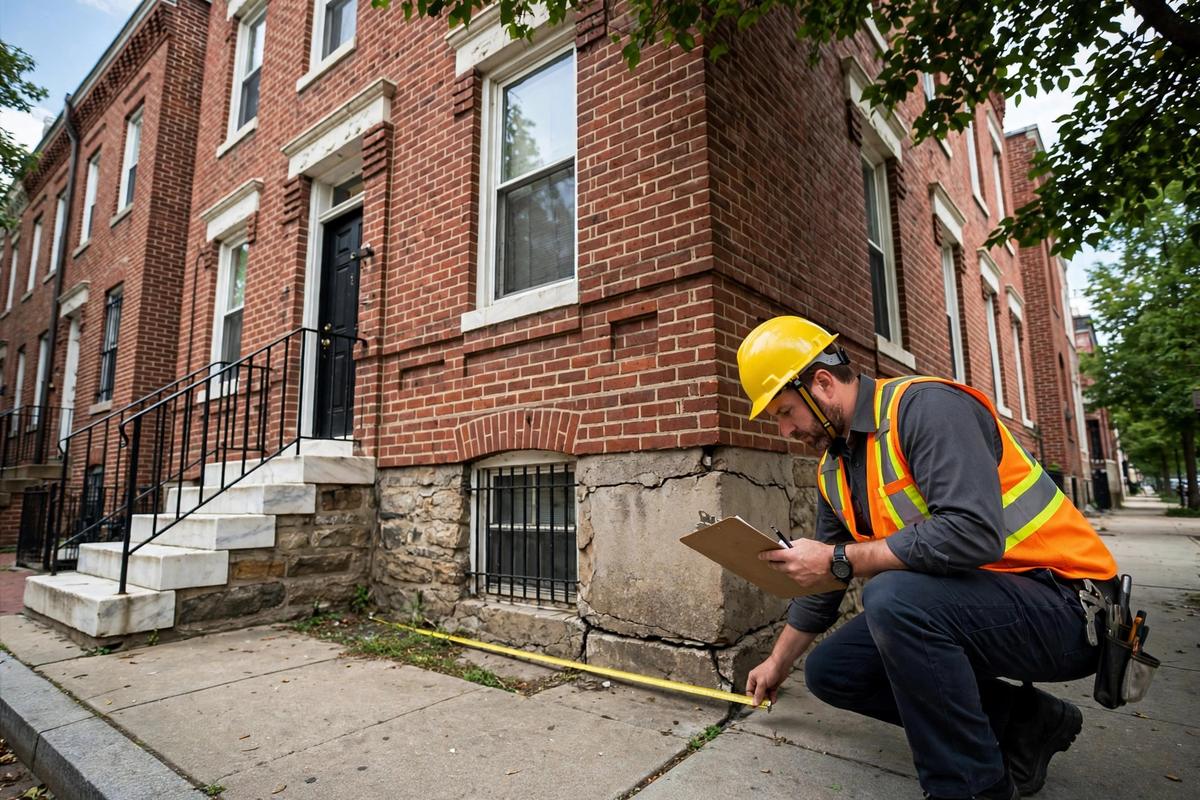
Homeowners planning foundation work in Washington quickly meet a practical question: does this need a permit? Structural repairs — underpinning, pier installation, wall rebuilding, significant excavation — commonly fall under the District's building regulations, while minor sealing and maintenance often do not. Rules and requirements change and vary by scope, so this guide is an orientation, not legal advice: it explains what typically triggers permitting, why skipping it creates problems later, and the role a reputable provider plays in handling the process.
As a general pattern, work that changes the structure or its support — installing piers or underpinning, rebuilding or significantly altering foundation walls, adding new footings, underpinning for a lower-level dig-out — is the kind of scope building departments regulate, often with drawings and inspections. In historic districts or on landmark properties, additional review of exterior-visible changes may apply. Crack injection, interior drainage and sump installation sit at the lighter end, but even there, electrical work for pumps can have its own requirements. When in doubt, the provider should verify against the current District rules for your exact scope and address.
A permit creates an independent record that the work was described, reviewed and inspected — valuable when you sell, refinance or file an insurance claim, because unpermitted structural work discovered later becomes the seller's problem to explain. Inspections also give you a second set of professional eyes on methods like pier depth and wall construction. The cost and time of permitting are real, but they are modest next to the value of documented, inspectable structural work on your largest asset.
For permitted foundation work the provider typically prepares the application (sometimes with engineering input for structural designs), schedules inspections at the required stages — for example after excavation or pier installation and before backfill — and keeps the approval documents with the project records. Timelines vary with scope and review load, which is one more reason to start conversations early if a sale or renovation deadline is involved. Ask at estimate time exactly which permits your scope needs and who is responsible for obtaining them.
Be cautious with any provider who dismisses permitting for clearly structural work, asks you to pull an owner permit to shield their own work, or cannot explain the inspection steps for your project. The standard to hold — for work in the District — is a written scope that names the permit path explicitly. Providers reached through DC Foundation Pros work in Washington regularly and can explain, for your specific project, what approvals apply and how they will be handled.
It is also worth remembering how much Washington housing varies within a few blocks. A single street can hold 1890s brick row houses on stone foundations, 1920s colonials on block, post-war homes on poured concrete and recent construction with modern drainage — each aging differently under the same weather. Clay content in the soil changes across the District as well, which is why two neighbors can have genuinely different foundation experiences. Local providers see that variety every week, and their pattern recognition matters: they know which neighborhoods sit on troublesome soil, which eras of construction used which foundation materials, and which repair methods have proven themselves on each. When you read general national advice about foundations, translate it through that local lens — or better, ask a provider who works in Washington to translate it for your address.
For the services behind this guide, start with our foundation services in Washington, DC overview, compare foundation repair with a professional foundation inspection, or go straight to foundation repair in Washington, DC on the homepage.
Whatever you decide, three habits protect homeowners: get the scope in writing with methods and areas named; clarify what happens if hidden conditions are found once work opens the wall or soil; and keep every document — evaluation, contract, diagrams, warranty papers — in one file for the day you sell or refinance. If you would like the first step handled for you, DC Foundation Pros exists for exactly that: call (202) 449-5049, describe your home and what you have noticed, and we will connect you with an independent local foundation provider. There is no obligation — just a shorter path from worry to a professional, documented opinion.
Calling DC Foundation Pros takes a few minutes. We ask what you have noticed — when it started, whether it is changing, which part of the house is involved — and where in Washington you are. We then match you with an independent local provider whose work fits the problem: repair, waterproofing, stabilization, drainage or evaluation. You speak with the provider directly, schedule the inspection at a time that suits you, and receive their findings and any proposal in writing. The decision to proceed, and every term of the work, is between you and the provider. The referral itself is free, the lines are answered around the clock, and there is no obligation at any point — the service exists to replace a week of searching and callbacks with one conversation.

Sudden cracks, a wall that moves, water pouring in — which foundation problems are genuine emergencies and the first steps to take.
Read the guide →
What a foundation warranty actually covers depends on the fine print: scope, transferability, exclusions and who stands behind it. How to read one.
Read the guide →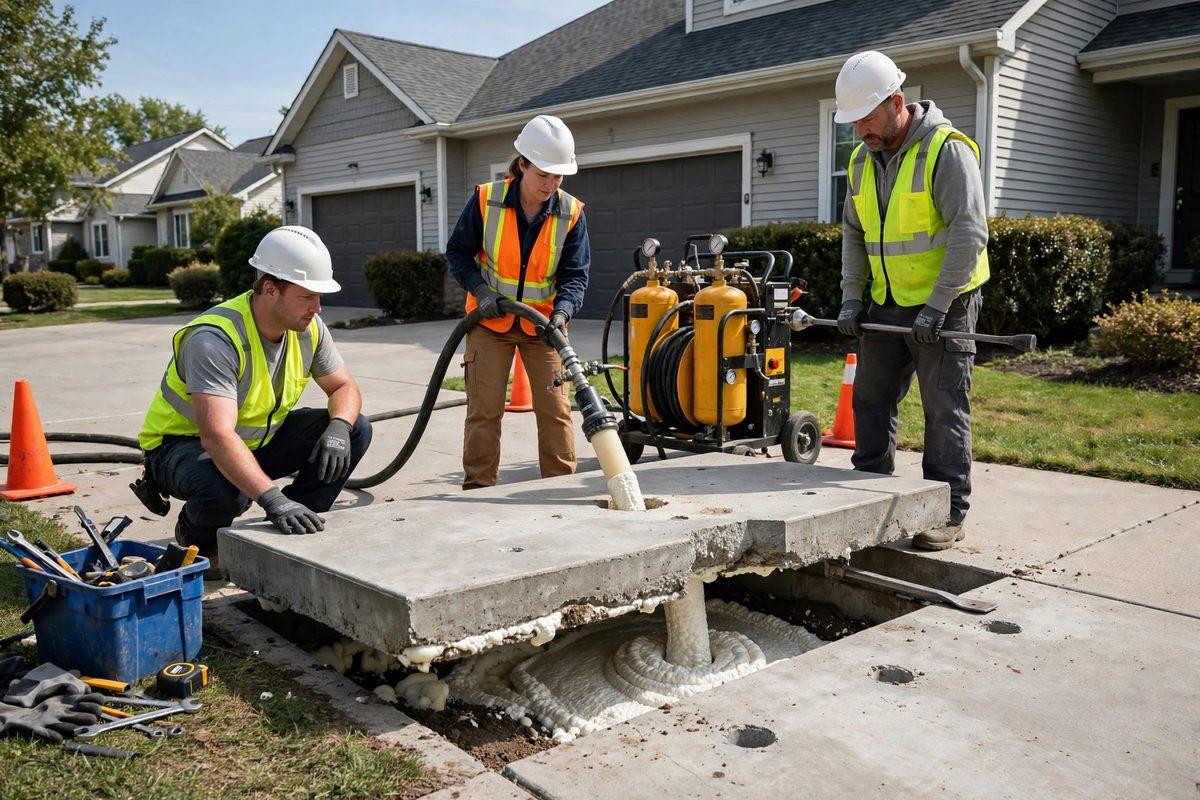
Both methods raise sunken slabs by filling the void beneath. How they differ in material, holes, weight and longevity — and when replacement beats both.
Read the guide → DC Foundation Pros
Call DC Foundation Pros now and we will connect you with an independent local foundation provider in Washington, DC — no pressure, no obligation. Lines are open 24/7.