Basement Waterproofing in Washington, DC: A Homeowner's Guide
Interior systems, exterior membranes, drainage and sump pumps — how basement waterproofing actually works in DC homes and how to choose an approach.
Read the guide →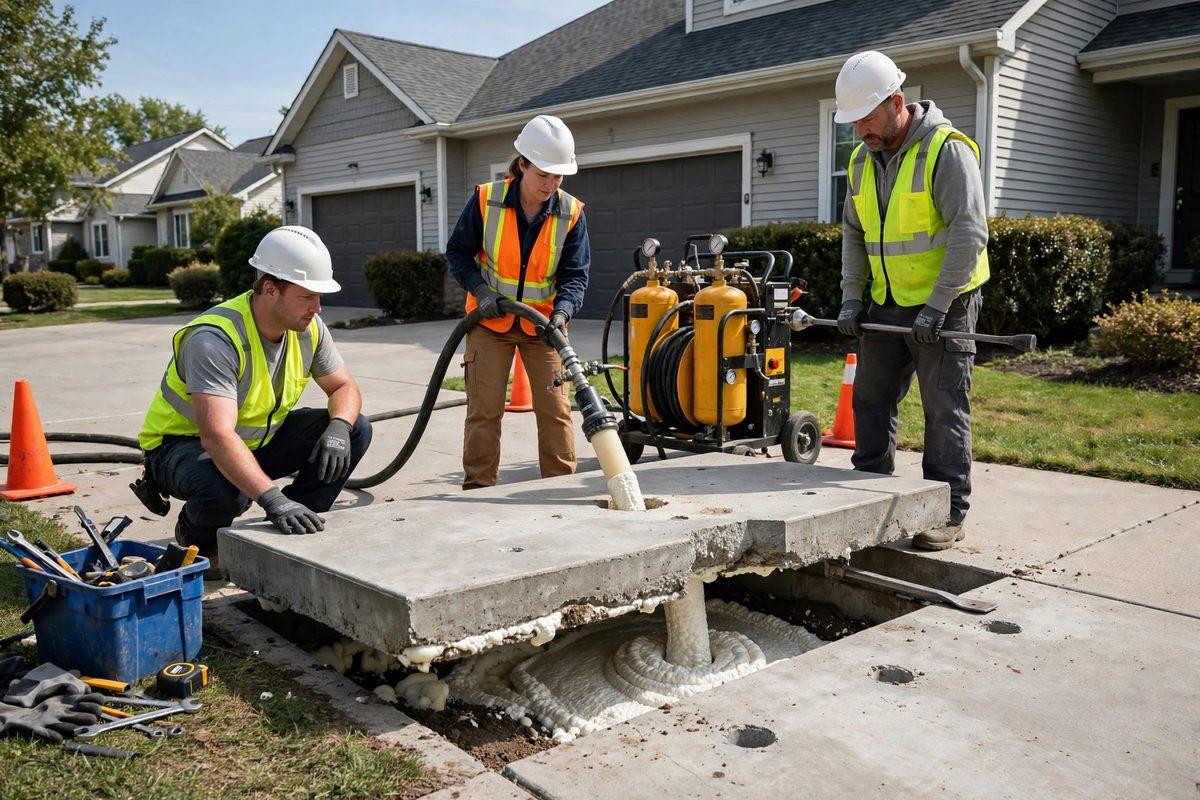
Sunken concrete — a settled slab, a tilted stoop, a driveway panel dropped at the garage — usually shares one cause: the soil or fill beneath it has washed out, compacted or shrunk, leaving a void the slab bridges until it cracks or sinks. Concrete lifting fills that void and raises the slab back to level. Two methods dominate: traditional mudjacking and polyurethane foam lifting. This guide explains how each works, where each performs best, and the honest limits of lifting versus full slab replacement.
Mudjacking drills a pattern of holes through the slab and pumps a cement-and-soil slurry under pressure. The slurry fills voids and, as pumping continues, hydraulically lifts the slab. The holes are patched with concrete. The material is inexpensive and the method has decades of history. Its drawbacks: the slurry is heavy (adding load to soil that already failed), the drill holes are relatively large, and the fill can erode if water flow under the slab continues unchecked — so the drainage cause matters as much as the fill.
Polyurethane lifting injects a two-part foam through much smaller holes. The foam expands as it cures, filling voids and lifting the slab with controlled pressure, then sets into a light, water-resistant solid within minutes — the slab can typically be used the same day. The foam's light weight avoids burdening weak soil, and its water resistance suits areas with washout. Material cost per project usually runs higher than mudjacking, partly offset by smaller patches and speed.
For large, thick slabs with stable underlying soil, mudjacking's economy can be sensible. For precision lifts, weak soils, interior slabs and fast return to service, polyurethane usually wins. Neither method fixes slabs that are badly cracked into many pieces, undermined by an active washout that will continue, or sitting over soil problems tied to the foundation itself — those cases point to replacement or a broader drainage and foundation conversation. Any honest lifting proposal will say which case your slab is.
Ask what caused the settlement, whether that cause is corrected, the hole size and patch appearance, the material's track record in similar work, and what the provider documents if the slab settles again. Photograph elevations before work for comparison. Through DC Foundation Pros you can connect with a local concrete lifting provider who will inspect your slab, explain method options in plain terms, and give you a written plan — including when replacement is the smarter spend.
It is also worth remembering how much Washington housing varies within a few blocks. A single street can hold 1890s brick row houses on stone foundations, 1920s colonials on block, post-war homes on poured concrete and recent construction with modern drainage — each aging differently under the same weather. Clay content in the soil changes across the District as well, which is why two neighbors can have genuinely different foundation experiences. Local providers see that variety every week, and their pattern recognition matters: they know which neighborhoods sit on troublesome soil, which eras of construction used which foundation materials, and which repair methods have proven themselves on each. When you read general national advice about foundations, translate it through that local lens — or better, ask a provider who works in Washington to translate it for your address.
For the services behind this guide, start with our foundation services in Washington, DC overview, compare foundation repair with a professional foundation inspection, or go straight to foundation repair in Washington, DC on the homepage.
Whatever you decide, three habits protect homeowners: get the scope in writing with methods and areas named; clarify what happens if hidden conditions are found once work opens the wall or soil; and keep every document — evaluation, contract, diagrams, warranty papers — in one file for the day you sell or refinance. If you would like the first step handled for you, DC Foundation Pros exists for exactly that: call (202) 449-5049, describe your home and what you have noticed, and we will connect you with an independent local foundation provider. There is no obligation — just a shorter path from worry to a professional, documented opinion.
Calling DC Foundation Pros takes a few minutes. We ask what you have noticed — when it started, whether it is changing, which part of the house is involved — and where in Washington you are. We then match you with an independent local provider whose work fits the problem: repair, waterproofing, stabilization, drainage or evaluation. You speak with the provider directly, schedule the inspection at a time that suits you, and receive their findings and any proposal in writing. The decision to proceed, and every term of the work, is between you and the provider. The referral itself is free, the lines are answered around the clock, and there is no obligation at any point — the service exists to replace a week of searching and callbacks with one conversation.
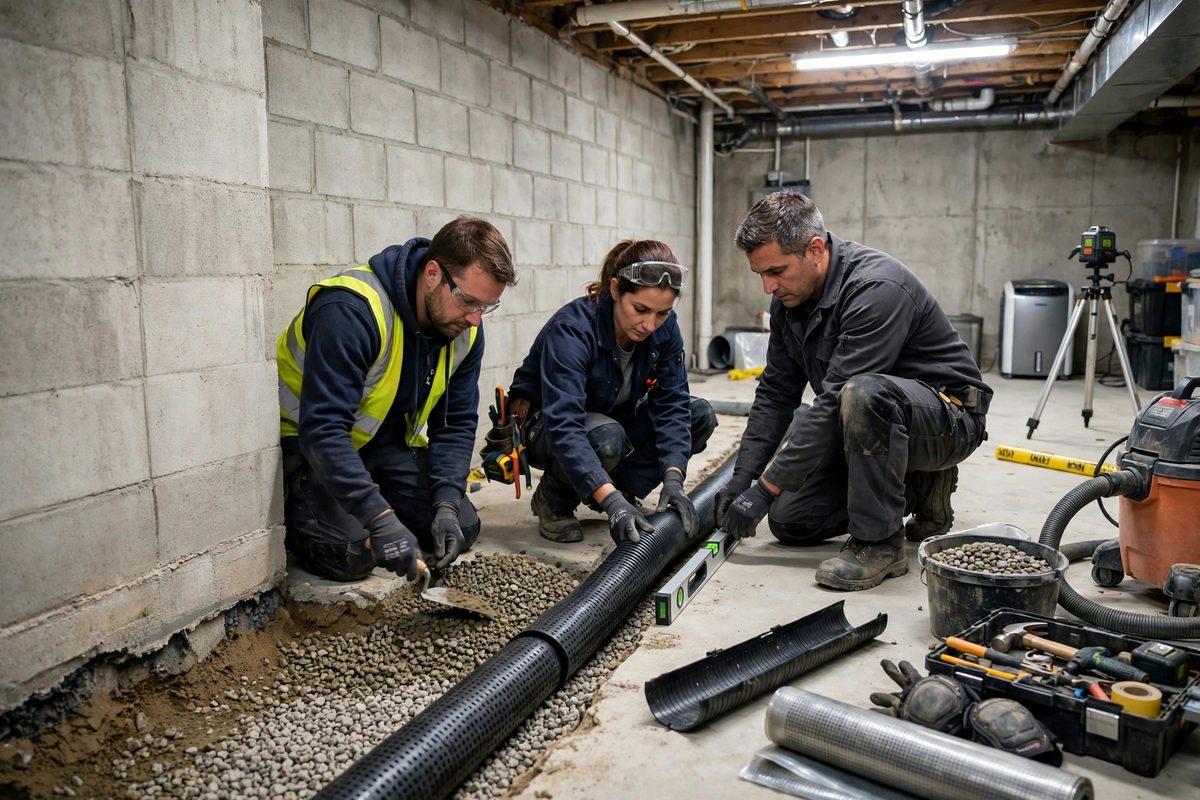
Interior systems, exterior membranes, drainage and sump pumps — how basement waterproofing actually works in DC homes and how to choose an approach.
Read the guide →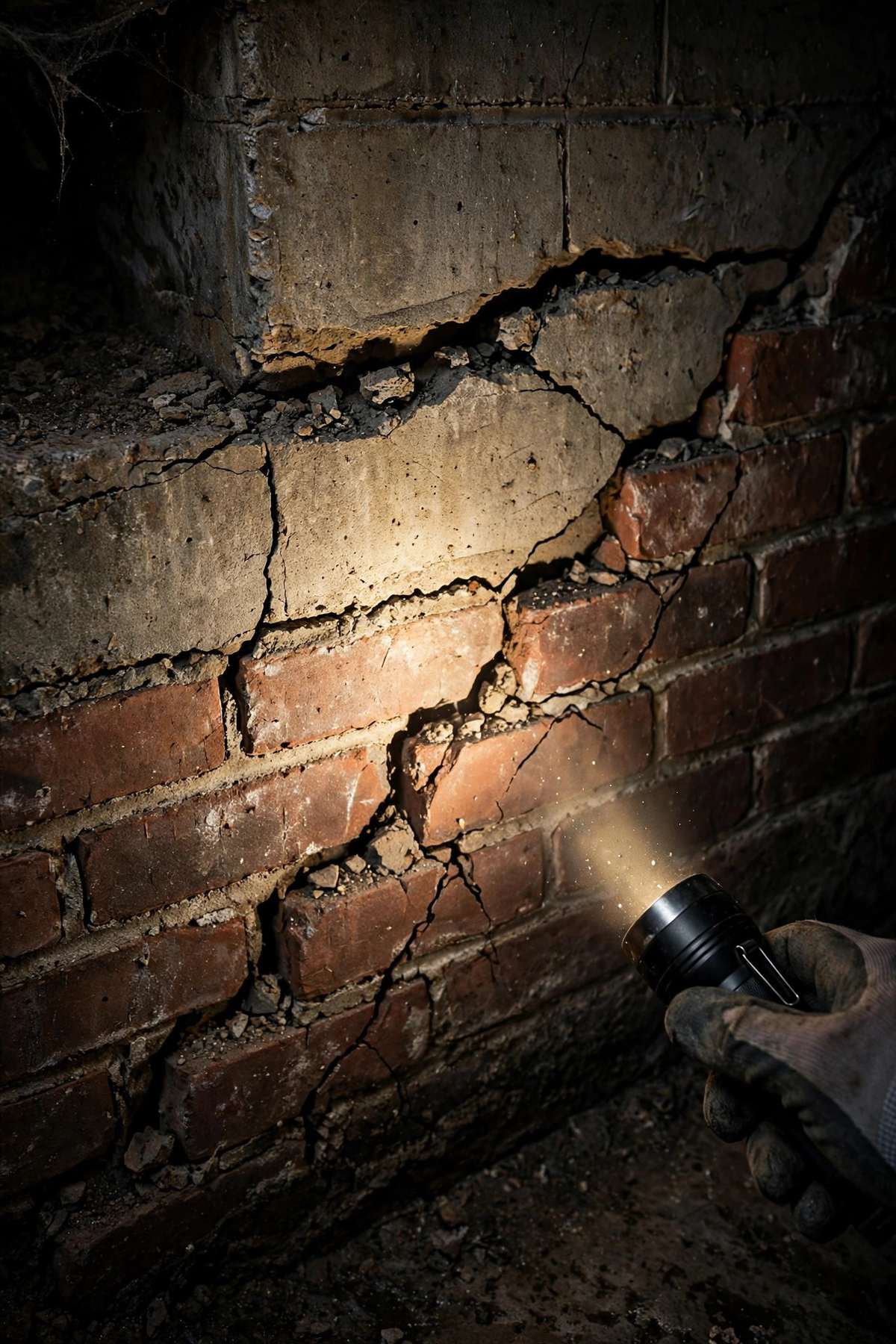
That zigzag crack climbing your brickwork is your foundation talking. What causes stair-step cracks in DC's brick homes, and the steps to take.
Read the guide →
Primary pumps, battery backups and discharge lines — how sump systems work, why backups matter in DC storms, and the maintenance that keeps them ready.
Read the guide → DC Foundation Pros
Call DC Foundation Pros now and we will connect you with an independent local foundation provider in Washington, DC — no pressure, no obligation. Lines are open 24/7.