Stair-Step Cracks in Brick: Causes and What to Do Next
That zigzag crack climbing your brickwork is your foundation talking. What causes stair-step cracks in DC's brick homes, and the steps to take.
Read the guide →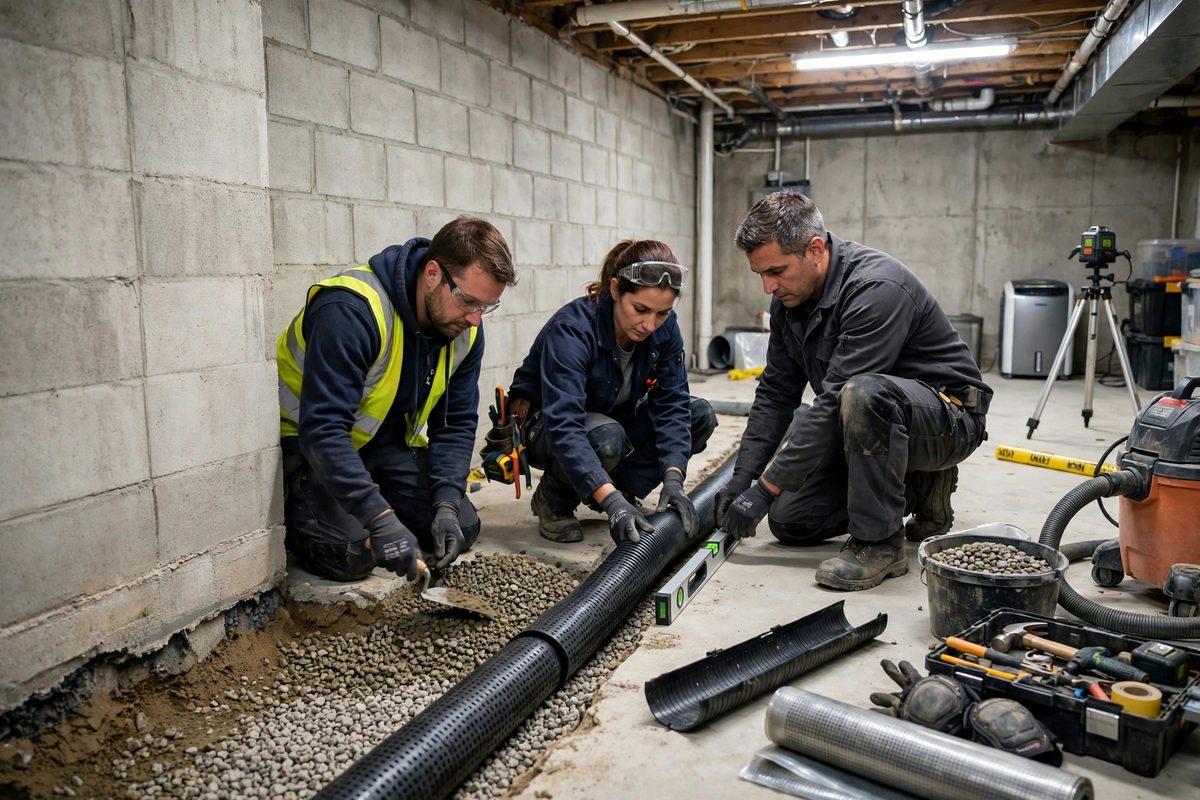
A wet basement in Washington is rarely bad luck — it is water following physics. Groundwater rises after rain, surface water runs toward foundations with poor grading, and hydrostatic pressure pushes moisture through floor joints, cracks and porous walls. Basement waterproofing is the set of systems that manage that water before it damages your home. This guide explains how interior and exterior waterproofing work, where sump pumps and drainage fit, and the questions that help DC homeowners choose the right approach for their basement.
Most basement water enters at the cove joint where the floor meets the wall, through floor or wall cracks, or by seeping through porous masonry. Surface water from overflowing gutters and downspouts that discharge at the foundation is a frequent, fixable contributor. True groundwater problems rise with the water table after sustained rain. A proper diagnosis distinguishes these sources, because the right system for surface water (grading and gutters) is different from the right system for groundwater (interior drainage and a sump pump).
An interior system installs a drainage channel along the inside perimeter of the foundation, below or beside the floor, which collects water and routes it to a sump pit and pump that discharge it outside. Wall panels or membranes can direct wall seepage into the channel. Interior systems are popular in DC row houses because they do not require excavating against the neighbor's property or under porches and additions, and they address the cove-joint leaks that are most common.
Exterior waterproofing excavates to the footing, applies a membrane to the outside of the wall, and installs or renews exterior drain tile. It stops water before it enters the wall, which suits new construction and major renovations where the soil is already open, or walls deteriorating from years of saturation. It is the more disruptive and costly route, and in dense DC neighborhoods the excavation may simply not be possible on every side of the house.
Many homes need a combination: exterior grading and downspout corrections outside, an interior drainage system and a reliable sump pump inside, with a battery backup for storm outages. Ask any provider to explain where the water will be collected, where it discharges, and what happens in a power outage. Through DC Foundation Pros you can connect with a local waterproofing provider who will inspect your basement and recommend a system based on your water source — not a one-size package.
It is also worth remembering how much Washington housing varies within a few blocks. A single street can hold 1890s brick row houses on stone foundations, 1920s colonials on block, post-war homes on poured concrete and recent construction with modern drainage — each aging differently under the same weather. Clay content in the soil changes across the District as well, which is why two neighbors can have genuinely different foundation experiences. Local providers see that variety every week, and their pattern recognition matters: they know which neighborhoods sit on troublesome soil, which eras of construction used which foundation materials, and which repair methods have proven themselves on each. When you read general national advice about foundations, translate it through that local lens — or better, ask a provider who works in Washington to translate it for your address.
For the services behind this guide, start with our foundation services in Washington, DC overview, compare foundation repair with a professional foundation inspection, or go straight to foundation repair in Washington, DC on the homepage.
Whatever you decide, three habits protect homeowners: get the scope in writing with methods and areas named; clarify what happens if hidden conditions are found once work opens the wall or soil; and keep every document — evaluation, contract, diagrams, warranty papers — in one file for the day you sell or refinance. If you would like the first step handled for you, DC Foundation Pros exists for exactly that: call (202) 449-5049, describe your home and what you have noticed, and we will connect you with an independent local foundation provider. There is no obligation — just a shorter path from worry to a professional, documented opinion.
Calling DC Foundation Pros takes a few minutes. We ask what you have noticed — when it started, whether it is changing, which part of the house is involved — and where in Washington you are. We then match you with an independent local provider whose work fits the problem: repair, waterproofing, stabilization, drainage or evaluation. You speak with the provider directly, schedule the inspection at a time that suits you, and receive their findings and any proposal in writing. The decision to proceed, and every term of the work, is between you and the provider. The referral itself is free, the lines are answered around the clock, and there is no obligation at any point — the service exists to replace a week of searching and callbacks with one conversation.
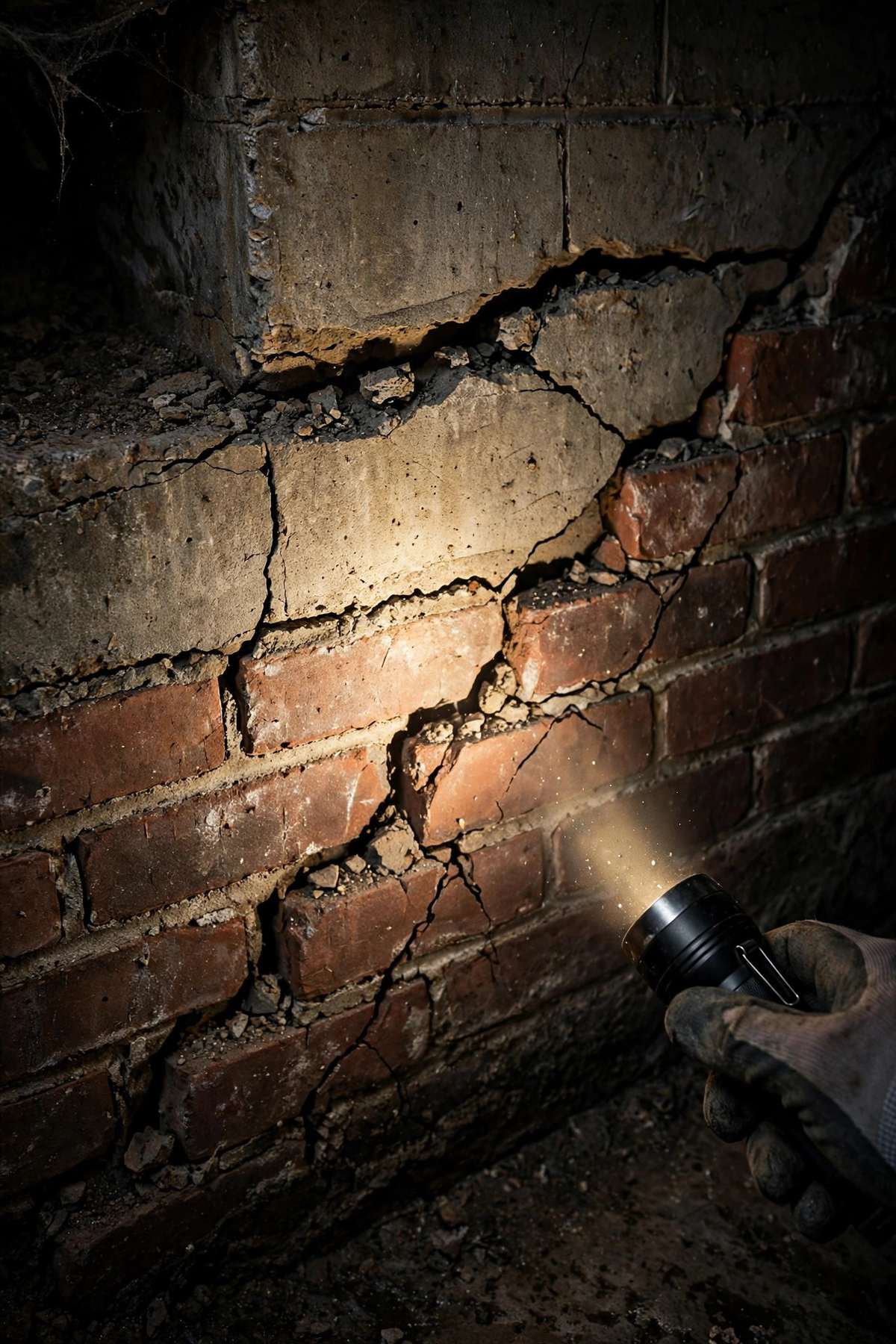
That zigzag crack climbing your brickwork is your foundation talking. What causes stair-step cracks in DC's brick homes, and the steps to take.
Read the guide →
Crack direction tells a story. Vertical cracks often mean shrinkage, horizontal cracks mean pressure, and stair-step cracks mean movement — here is the full guide.
Read the guide →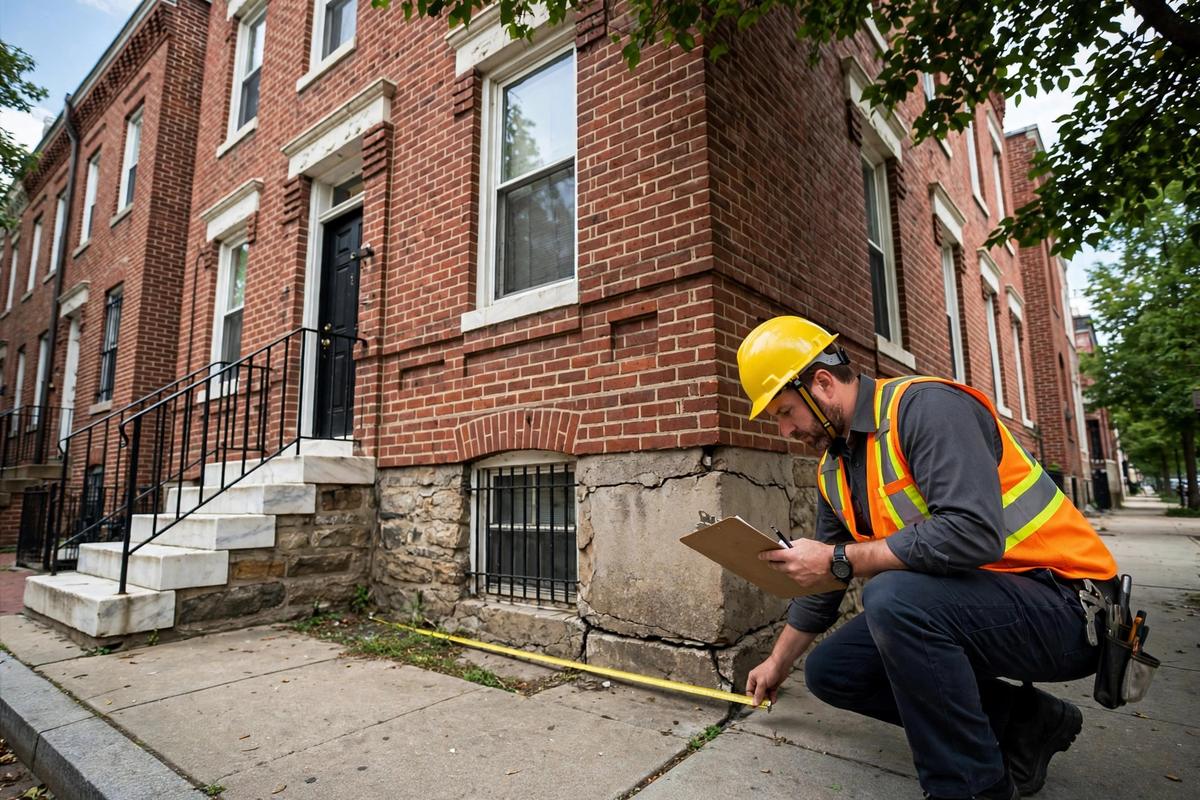
Crack mapping, floor elevation checks, drainage review and a written report — step by step through a professional foundation inspection.
Read the guide → DC Foundation Pros
Call DC Foundation Pros now and we will connect you with an independent local foundation provider in Washington, DC — no pressure, no obligation. Lines are open 24/7.