How Long Does Foundation Repair Take? Timelines by Project Type
Crack injection in a day, piers in days, waterproofing in between — realistic timeline ranges and the factors that stretch them.
Read the guide →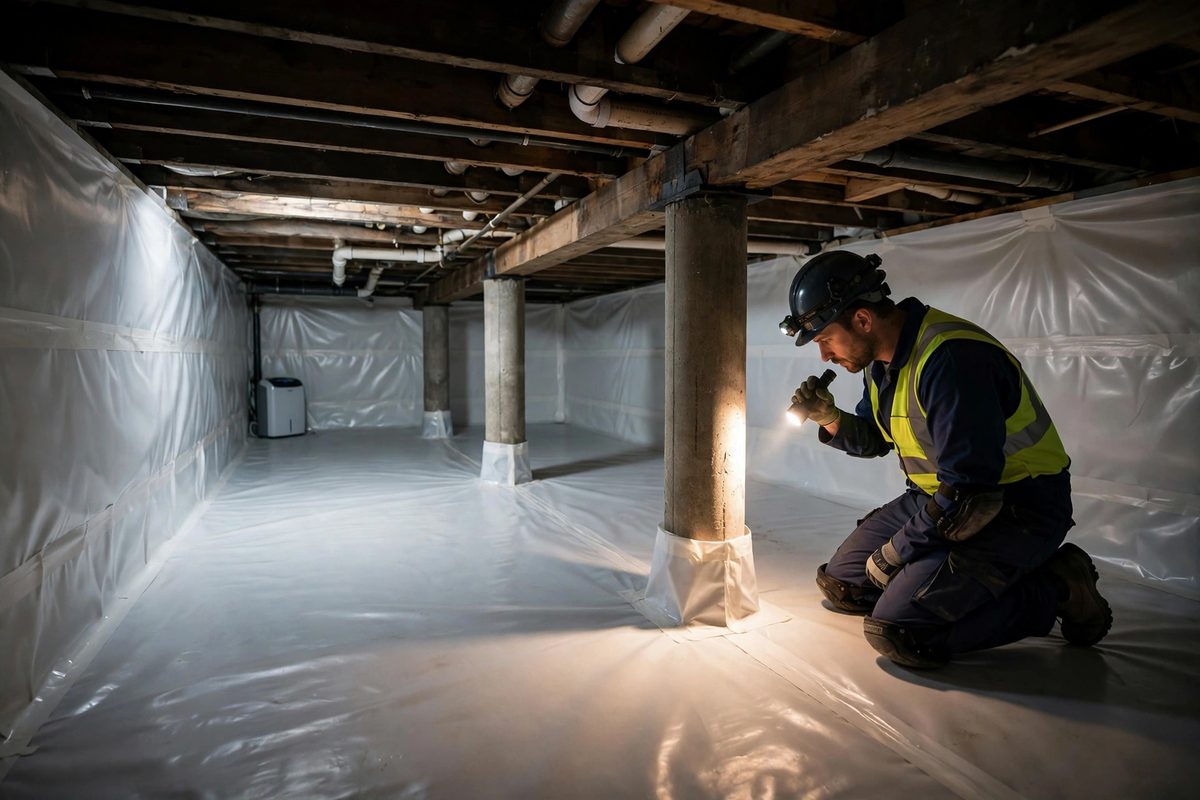
A large share of the air in a house comes from below it — drawn upward by the stack effect through every gap in the floor. Whatever lives in the crawl space air — moisture, mold spores, musty odors, soil gases — rides along. That is why crawl space moisture so often announces itself upstairs: smells that will not leave, hardwood cupping, allergy complaints, floors cold in winter. This guide connects those symptoms to their below-floor causes and explains the repair sequence — drainage, sealing, humidity control — that addresses the source.
Musty odor that intensifies in humid weather is the classic calling card. Hardwood floors cup as they absorb moisture from below; laminate and engineered floors can swell at seams. Indoor humidity stays high despite air conditioning. In the crawl space itself the evidence is direct: water stains or standing water, mold on joists and the underside of the floor, insulation sagging or fallen, and wood that probes soft at the sill plate or beam ends. Any two of these together justify a professional look below.
Ground evaporation is constant and often underestimated — bare soil releases moisture continuously. Vent openings, intended by old practice to dry the space, instead admit humid summer air that condenses on cool surfaces. Plumbing leaks and dryer or bath vents discharging under the house add load, and surface water can enter through vents and access wells after heavy rain. A thorough inspection inventories all of these, because sealing the floor while a pipe drips above it just hides the leak.
Source control comes first: exterior grading and downspouts, plumbing repairs, and drainage or a sump for any water entry. Then the ground is covered with a sealed vapor barrier, vents are closed, and humidity is managed with a dehumidifier or conditioned air. Structural damage found along the way — rotted sill plates, damaged joists, settled supports — is repaired while access is open. Encapsulation is the name for the complete version of this sequence, and it doubles as the moment to fix the structure it protects.
Homeowners typically notice odor fading within weeks, indoor humidity stabilizing, floors feeling less cold, and the musty cycle of summer complaints ending. Just as important is what stops: joist and sill decay, mold growth on framing, and pest pressure in damp wood. If your home shows the upstairs symptoms, a crawl space inspection with photos — arranged through DC Foundation Pros with a local provider — will show you exactly what is happening beneath your floors and what the fix involves.
Washington adds local wrinkles to every foundation topic on this page. Much of the District's housing predates poured-concrete foundations: brick and rubble-stone foundation walls, shared party walls in row houses, and cellars that were never designed as living space now serve as finished lower levels. Soils across much of the city carry clay that swells when wet and shrinks in drought, and winters cycle through freeze and thaw often enough to ratchet small cracks wider season after season. Intense summer downpours complete the picture, delivering roof and yard water faster than aging drainage can move it. Advice that ignores those conditions misses the point — the right choice for a Capitol Hill row house is not automatically the right choice for a detached home in Chevy Chase, and any provider worth hiring will ask about your specific house, its era and its walls before recommending a direction.
For the services behind this guide, start with our foundation services in Washington, DC overview, compare foundation repair with a professional foundation inspection, or go straight to foundation repair in Washington, DC on the homepage.
Nearly every foundation question eventually becomes a choice between repair, stabilization, waterproofing or monitoring — and the wrong sequence wastes money. Cosmetic repairs made before movement is stabilized simply fail again; waterproofing installed against the wrong water source disappoints; piers installed where drainage correction would have sufficed overspend the problem. The reliable order is diagnosis first: measured elevations, mapped cracks, an identified water source, and a written statement of whether the condition is active or historical. With that in hand, the options price themselves honestly, and you can compare providers on identical scope. Insist on documentation rather than adjectives — a provider who measures and photographs is a provider whose recommendation you can test.
Calling DC Foundation Pros takes a few minutes. We ask what you have noticed — when it started, whether it is changing, which part of the house is involved — and where in Washington you are. We then match you with an independent local provider whose work fits the problem: repair, waterproofing, stabilization, drainage or evaluation. You speak with the provider directly, schedule the inspection at a time that suits you, and receive their findings and any proposal in writing. The decision to proceed, and every term of the work, is between you and the provider. The referral itself is free, the lines are answered around the clock, and there is no obligation at any point — the service exists to replace a week of searching and callbacks with one conversation.
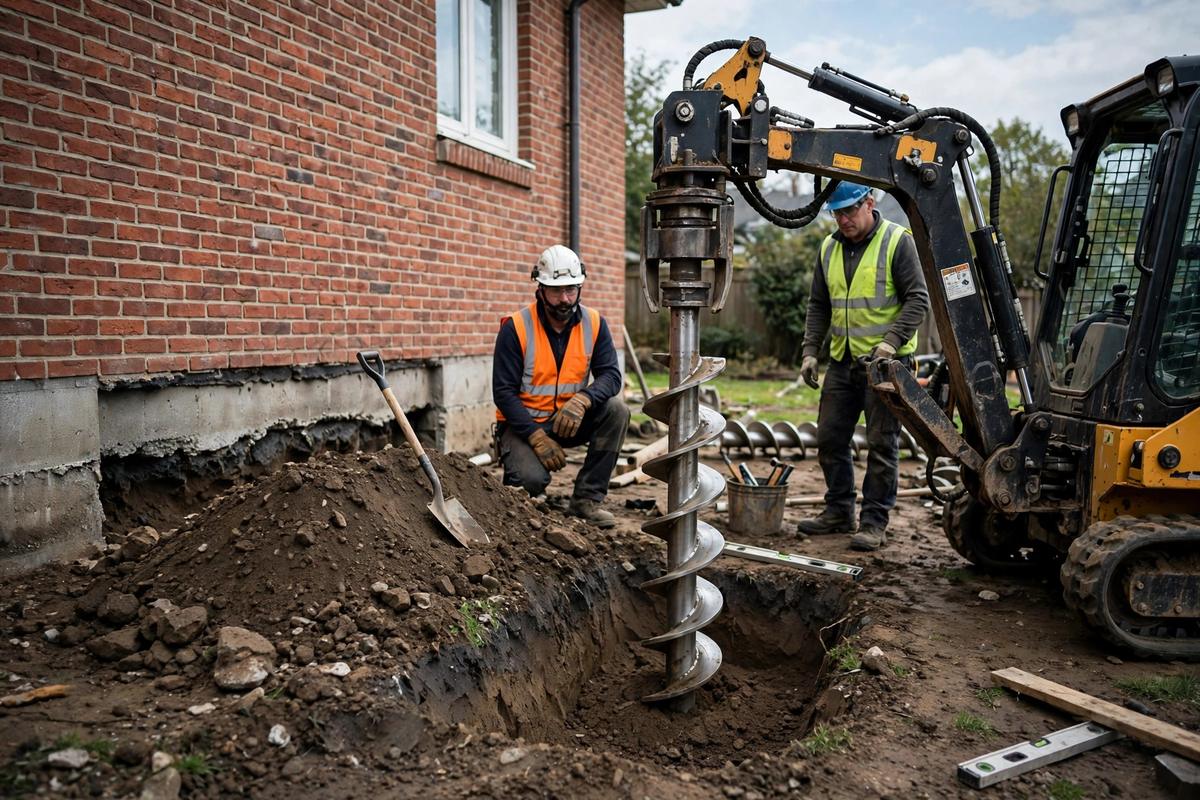
Crack injection in a day, piers in days, waterproofing in between — realistic timeline ranges and the factors that stretch them.
Read the guide →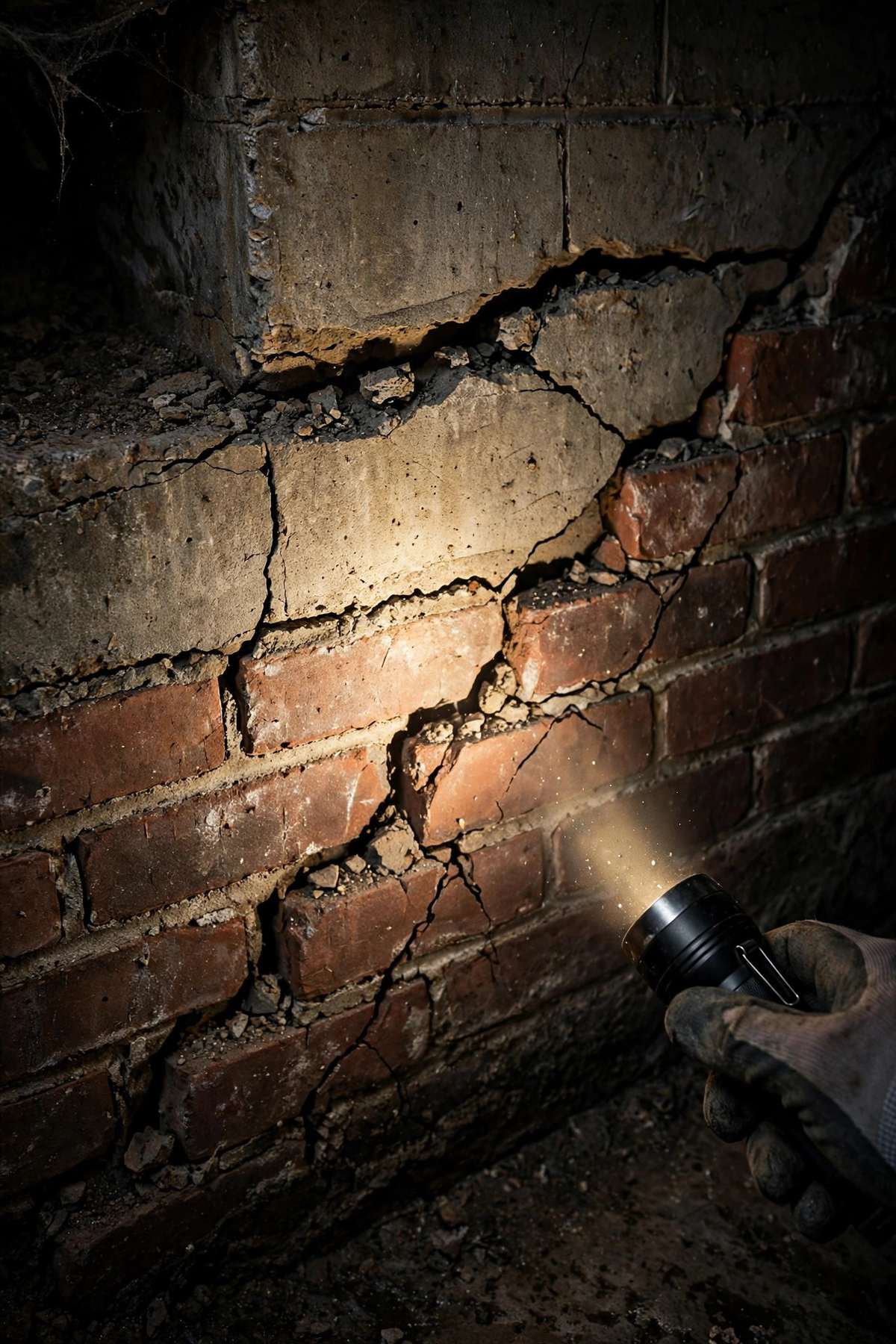
Sticking doors, stair-step cracks, gaps at trim and sloping floors: which settlement signs are cosmetic and which mean the foundation is moving.
Read the guide →
Hydraulic lifting, piers, beams and shims — how house leveling works, what it can and cannot correct, and what to expect during the job.
Read the guide → DC Foundation Pros
Call DC Foundation Pros now and we will connect you with an independent local foundation provider in Washington, DC — no pressure, no obligation. Lines are open 24/7.